What’s in This Guide
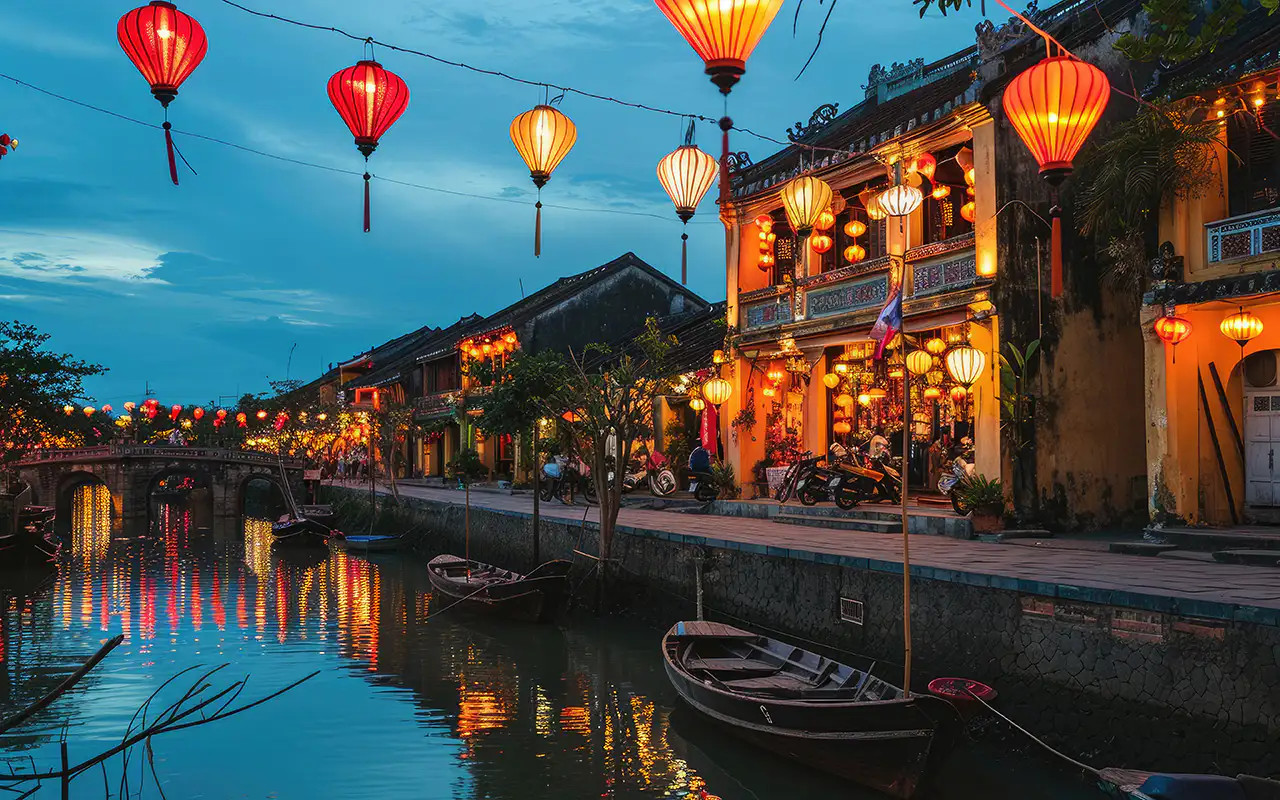
Hoi An is Vietnam’s most atmospheric and charming destination—a UNESCO World Heritage ancient town where lantern-lit streets wind past centuries-old merchant houses, French colonial buildings, and riverside cafes. Located on Vietnam’s central coast, this compact town offers the perfect blend of history, culture, beaches, and incredible food.
Unlike the frenetic energy of Hanoi or Ho Chi Minh City, Hoi An moves at a slower, more relaxed pace. Spend your days cycling through rice paddies, learning to cook Vietnamese classics, getting custom clothes made by talented tailors, and watching the nightly lantern ceremony from the iconic Japanese Bridge.
🏮 Quick Facts
UNESCO World Heritage Site since 1999. Ancient trading port with 400+ historic buildings. Famous for lantern festivals (14th day of lunar month), tailor shops, and some of Vietnam’s best food. Located 30km from Da Nang Airport.
Why Visit Hoi An?
🏮 UNESCO Ancient Town
Wander car-free streets lined with yellow colonial buildings, Chinese temples, and wooden merchant houses. At night, hundreds of silk lanterns illuminate the ancient quarter, creating a magical atmosphere. The Japanese Covered Bridge, Assembly Halls, and historic homes transport you back 400 years to Hoi An’s trading port heyday.
🍜 Culinary Paradise
Hoi An has some of Vietnam’s finest food. Try local specialties like cao lầu (pork noodles found nowhere else), bánh mì from world-famous Banh Mi Phuong, and white rose dumplings. Take a cooking class, eat at riverside restaurants, or join a street food tour to discover why food is Hoi An’s secret weapon.

🏖️ Beautiful Beaches
Just 5km from Old Town, An Bang and Cua Dai beaches offer white sand, calm turquoise water, and excellent beach clubs. Spend mornings exploring temples, afternoons lounging by the ocean, and evenings back in town for dinner and lanterns. The best of both worlds—culture and beach relaxation.
🎨 Book Hoi An Experiences
Skip the planning stress. Book cooking classes, lantern-making workshops, bike tours through countryside, and day trips to My Son temples—all with expert local guides and guaranteed best prices.
When to Visit Hoi An
Hoi An’s weather is more extreme than you might expect for a beach destination. The dry season offers perfect conditions, while the rainy season brings serious flooding. Timing matters here.

Best Time to Visit
February to April (Peak Season) ☀️
The goldilocks months. Not too hot, minimal rain, comfortable beach weather (25-30°C). February has Tet (Lunar New Year) festivities with special decorations and events. March-April offers warm, dry days perfect for beach time and countryside cycling. Expect higher prices and more tourists, especially around Tet.
May to August (Summer) 🌡️
Hot and humid (32-35°C) but dry. Beach weather is ideal, though midday can be scorching. The ancient town empties during midday heat—smart travelers explore early morning or late afternoon. Prices drop slightly from peak season. Good shoulder season for those who can handle heat.
When to Avoid
September to January (Rainy Season) 🌧️
⚠️ Flooding Alert
October-December can see serious flooding. Heavy rains cause the Thu Bon River to overflow, flooding the ancient town (sometimes waist-deep). While flooding creates dramatic photos, it disrupts travel, closes businesses, and can be dangerous. November is the worst month.
If you must visit rainy season: Book flexible accommodations, have backup plans, and check weather forecasts daily. The flooding is unpredictable—you might get lucky with sunshine or spend days watching rain.
Lunar Calendar Events
Full Moon Lantern Festival (14th day of lunar month): The ancient town goes car-free, lights go out, and thousands of lanterns illuminate the streets. Local vendors sell traditional snacks, performances fill the squares, and the atmosphere is magical. Check the lunar calendar and plan to be in town for at least one full moon.
| Season | Weather | Pros | Cons | Verdict |
|---|---|---|---|---|
| Feb-Apr | 25-30°C, dry | Perfect weather, Tet festivities | Higher prices, more tourists | ⭐ Best time |
| May-Aug | 30-35°C, dry | Great beach weather, lower prices | Very hot midday | Good for heat lovers |
| Sep-Jan | 20-28°C, wet | Lower prices, fewer tourists | Heavy rain, flooding risk | ⚠️ Avoid if possible |
Getting to Hoi An
Hoi An has no airport—you’ll fly into Da Nang (30km north), Vietnam’s fourth-largest city. The journey from Da Nang to Hoi An is straightforward with several options.
From Da Nang Airport

Private Car/Taxi (Fastest & Easiest)
Most popular option. Pre-book through your hotel or grab/taxi app for $15-25. Journey takes 45 minutes on the coastal highway with ocean views. Driver drops you at your accommodation door—crucial since Hoi An Old Town is car-free (you’ll need to walk the final stretch).
Pro tip: Many hotels offer free airport pickup if you book direct. Ask when reserving.
Airport Shuttle Bus (Budget Option)
Airport shuttle buses run hourly to Hoi An for $5-8. Journey takes 1 hour with stops. You’ll be dropped at the edge of town and need to walk or get a motorbike taxi to your hotel. Good for budget travelers with light luggage.
Motorbike Taxi (Grab Bike)
Book Grab Bike for $8-12. Fastest option (35-40 minutes) but only viable if traveling light (one small backpack). Not recommended with full suitcases or in rain.
From Other Vietnam Cities
- Hanoi: Fly to Da Nang (1.5 hours, $30-80) or overnight train to Da Nang (14 hours)
- Ho Chi Minh City: Fly to Da Nang (1.5 hours, $30-80) or bus (18+ hours, not recommended)
- Hue: Bus or private car (3-4 hours, $10-40). Scenic coastal route over Hai Van Pass
- Nha Trang: Bus (10 hours, $15-25) or fly to Da Nang
Getting Around Hoi An
Walking: Old Town is entirely walkable (1km across). Most hotels are within 10-minute walk of main attractions.
Bicycle: Rent bikes for $2-3/day. Perfect for exploring countryside, rice paddies, and beaches. Hotels provide free bikes.
Motorbike: Rent scooters for $5-8/day. Necessary for day trips but not needed for Old Town exploration.
Grab: Cheap motorbike taxis for getting to beaches ($2-3) or late-night rides home from dinner.
🚗 Book Airport Transfer
Stress-free arrival. Book private car from Da Nang Airport to your Hoi An hotel. Fixed price, professional driver, meet & greet service. No haggling, no surprises.
Where to Stay in Hoi An
Location is everything in Hoi An. The right neighborhood completely changes your experience. Here’s where to stay based on your priorities.

Old Town (Ancient Quarter)
Best for: First-time visitors, culture seekers, short stays
Stay right in the UNESCO zone for maximum atmosphere. Wake up to lanterns, walk to temples, fall asleep to the sound of the river. Hotels range from budget guesthouses in traditional wooden houses to boutique heritage hotels in restored merchant buildings.
Luxury ($100-300/night)
- Little Hoi An Central Boutique: Restored 200-year-old house, rooftop pool, riverside location
- Anantara Hoi An Resort: Former French colonial building, riverfront, luxury spa
- La Siesta Hoi An: Boutique elegance, central location, excellent breakfast
Mid-Range ($40-100/night)
- Lantana Hoi An: Great value, rooftop bar, walking distance to everything
- Hoi An Historic Hotel: Traditional architecture, courtyard pool, helpful staff
- Villa Hoa Su: Quiet lane, charming decor, free bikes
Budget ($15-40/night)
- Hoi An Chic Hotel: Clean modern rooms, rooftop terrace, central
- Sunflower Hotel: Family-run, excellent breakfast, bike rental included
- Tribee Ede Hostel: Social hostel, rooftop bar, walking tours
💡 Old Town Living Tips
- Streets are pedestrian-only 9am-11pm (no motorbike access)
- Can be noisy—bars, restaurants, and crowds until late
- Book rooms facing interior courtyards for quieter sleep
- Pricier than other areas but worth it for atmosphere
An Bang Beach (5km from Old Town)
Best for: Beach lovers, families, longer stays (4+ nights)
Stay right on the white sand beach. Perfect if you want beach mornings and Old Town evenings. 15-minute bike ride to ancient quarter. More relaxed vibe, less touristy, better value.
Beach Hotels ($30-150/night)
- Shambala Beach Villas: Beachfront bungalows, pool, beach club
- Hoi An Beach Resort: Family-friendly, kids club, direct beach access
- Little Beach Hoi An: Boutique beachfront, excellent restaurant
Countryside/Rice Paddies (2-4km from Old Town)
Best for: Peaceful retreats, honeymooners, photography enthusiasts
Wake up to water buffalo grazing, rice paddies stretching to mountains. Ultra-peaceful. Many resorts offer pools, spas, and free bikes for countryside exploration.
Countryside Resorts ($60-200/night)
- The Light Hotel: Modern minimalist, infinity pool overlooking rice fields
- Hoi An Eco Lodge: Bamboo bungalows, organic farm, cooking classes
- Laluna Resort: Boutique luxury, villa-style rooms, bicycles included
Exploring the Ancient Town
Hoi An’s UNESCO Old Town is compact (1 square kilometer) and entirely walkable. Buy an Old Town Ticket ($7) at any entrance to access 5 historic sites of your choice from 22 options. Ticket lasts 10 days—plenty of time.

Must-Visit Historic Sites
Japanese Covered Bridge (Chùa Cầu)
Hoi An’s iconic symbol. This 18th-century covered bridge connects the Japanese and Chinese quarters. The small temple inside honors the Northern God who controls weather and natural disasters. Best photographed early morning (6-7am) before crowds or at night when illuminated by lanterns.
Assembly Halls
Chinese merchant communities built ornate assembly halls—half temple, half community center. Don’t miss:
- Fujian Assembly Hall: Most elaborate, dedicated to sea goddess Mazu, intricate wood carvings
- Cantonese Assembly Hall: Beautiful courtyard garden, dragon sculptures
- Chaozhou Assembly Hall: Ornate wood carvings, peaceful atmosphere
Old Houses
Peek inside 200-300 year old merchant houses to see how wealthy trading families lived:
- Tan Ky House: Best-preserved, 7 generations of same family, Japanese-Chinese-Vietnamese architecture blend
- Phung Hung House: 2-story, shows flood markings on columns (water rises 3m during major floods)
- Duc An House: Still family-owned, see traditional crafts demonstrations
Best Streets to Wander
- Tran Phu Street: Main artery, temples and assembly halls
- Nguyen Thai Hoc Street: Parallel to river, cafes and boutiques
- Bach Dang Street: Riverside, best sunset spots
- Le Loi Street: Quiet residential area, authentic glimpse of local life
Lantern Festival Experience
On the 14th day of each lunar month, Hoi An celebrates its famous Lantern Festival. Starting around 6pm, the old town goes dark—no electric lights, no motorbikes, only lanterns illuminating streets and river. Locals sell traditional snacks, musicians perform, and the atmosphere is enchanting.
What to do: Release a floating lantern on the river ($1-2) for good luck, watch traditional music performances, wander car-free streets, photograph lantern reflections on water.
Hoi An’s Beaches
An Bang Beach (5km from Old Town)
The locals’ beach. White sand, turquoise water, chilled-out vibe. Unlike touristy Cua Dai, An Bang maintains authenticity. Dozens of beach clubs and restaurants line the shore—rent a sunbed for $2-3, order lunch and drinks, and spend the day.
Best beach clubs: Soul Kitchen (great food, chill vibe), La Plage (French-owned, wine selection), Salt Pub (sunset cocktails, live music).
How to get there: 15-minute bike ride on flat roads, or Grab motorbike ($2-3).
Cua Dai Beach (4km from Old Town)
Closer to town but suffered erosion in recent years. Still decent for swimming with several resorts and beach clubs. Less crowded than An Bang. Better for families wanting resort facilities.

Hidden Beach (7km from Old Town)
Secret spot. Undeveloped stretch of sand with a single beach bar. If you want complete peace and almost-empty beach, this is it. Bring cash—no ATMs nearby.
Things to Do in Hoi An
Cooking Classes
Hoi An offers Vietnam’s best cooking classes. Most include market visit, boat ride to herb farm, hands-on cooking, and eating your creations for lunch. Half-day classes cost $25-35.
- Morning Glory Cooking School: Run by celebrity chef Ms Vy, professional setup, small groups
- Gioan Cooking Class: Most authentic, family-run, countryside setting
- Red Bridge Cooking School: Scenic boat ride to rural farm, beautiful location
Countryside Cycling
Rent bikes and explore the gorgeous countryside surrounding Hoi An. Ride through rice paddies, water buffalo pastures, small villages, and vegetable farms. Several routes:
- Cam Thanh Village: 6km loop, coconut palm forests, traditional boat builders, water buffalo
- Tra Que Vegetable Village: 3km north, organic farms, cooking demonstrations, $2 entrance fee
- Rice Paddy Loop: West of town, stunning views, almost no tourists, quiet farms
Lantern-Making Workshop
Learn to make Hoi An’s famous silk lanterns. 1-hour workshops ($10-15) teach traditional techniques. You’ll leave with your own lantern—great souvenir.

Sunrise or Sunset at Marble Mountains
While not technically in Hoi An (15km north toward Da Nang), these five marble-limestone hills offer caves, temples, and panoramic views. Best visited early morning or late afternoon. $2 entrance, $3 elevator to summit.
Where to Eat in Hoi An
Hoi An serves some of Vietnam’s finest food. Don’t leave without trying local specialties that originated here and can’t be found elsewhere.
Must-Try Local Dishes
Cao Lầu
Hoi An’s signature dish. Thick rice noodles, pork, greens, and crispy crackers. The noodles are supposedly made with water from a single ancient well—legend says you can only make authentic cao lầu in Hoi An. Try it at Cao Lau Ba Le (local favorite) or Morning Glory (upscale version).

White Rose Dumplings (Bánh Bao Bánh Vạc)
Delicate steamed shrimp dumplings shaped like roses. Only one family in Hoi An knows how to make the translucent rice paper correctly. Eat at White Rose Restaurant (the original) or Morning Glory.
Bánh Mì
Banh Mi Phuong was declared “the best bánh mì in the world” by Anthony Bourdain. It’s true. Expect queues but worth the wait. $1.50 for a perfect Vietnamese baguette stuffed with pork, pâté, herbs, and pickles.
Com Ga (Chicken Rice)
Shredded chicken over fragrant rice with herbs and broth. Simple but delicious. Best at Com Ga Ba Buoi—local spot, no English menu, just point at what others are eating.
Best Restaurants
Fine Dining ($15-30/person)
- Morning Glory: Upscale Vietnamese classics, beautiful plating, excellent service
- Madam Khanh (The Banh Mi Queen): Not fine dining but legendary bánh mì stand
- Cargo Club: Riverside location, cocktails, fusion food, sunset views
Mid-Range ($5-15/person)
- Bale Well: Authentic cao lầu and local specialties, always packed with locals
- Mi Quang 1A: Best mi quang (turmeric noodles), no-frills local spot
- Madam Khanh (The Banh Mi Queen): Different from Morning Glory, authentic street food
Street Food & Cheap Eats ($2-5/person)
- Central Market: Food stalls upstairs, dirt cheap, super authentic
- Banh Mi Phuong: World-famous bánh mì for $1.50
- Street vendors near Japanese Bridge: Try everything—fried wontons, spring rolls, grilled pork
Cafes Worth Visiting
- Reaching Out Tea House: Social enterprise, serene garden, excellent Vietnamese tea
- Faifo Coffee: Local chain, strong Vietnamese coffee, free bike rental with purchase
- Mia Coffee: Hidden garden cafe, hammocks, peaceful escape from crowds
Shopping in Hoi An
Custom Tailoring
Hoi An is Vietnam’s tailoring capital. Over 400 tailor shops can make custom clothes in 24 hours. Bring photos of designs you like, choose fabric, get measured, and return for fittings. Suits start at $80, dresses from $30, shirts $20.

Best Tailor Shops
- Yaly Couture: Most famous, higher prices ($150-300 suits) but excellent quality
- Kimmy Tailor: Great balance of quality and price, helpful staff, good for beginners
- Bebe Tailor: Popular with women, beautiful dresses, reasonable prices
- A Dong Silk: Own silk factory, best fabric quality, higher prices but worth it
💡 Tailoring Tips
- Allow 3-4 days for best results (2 fittings minimum)
- Bring reference photos—be specific about what you want
- Check stitching, seams, and buttons carefully during fittings
- Negotiate prices but don’t expect rock-bottom rates for quality work
- Avoid shops that quote extremely low prices—you get what you pay for
Souvenirs & Crafts
- Silk lanterns: Hoi An’s signature souvenir. Buy at workshops for better prices than shops
- Lacquerware: Beautiful bowls, boxes, and art. Bargain hard at market stalls
- Ceramics: Local pottery villages produce traditional Vietnamese ceramics
- Vietnamese coffee: Buy ground coffee or beans at Central Market
Where to Shop
- Central Market: Souvenirs, snacks, fabrics, and local products. Bargain expected
- Night Market (An Hoi): Across An Hoi Bridge, touristy but fun atmosphere
- Reaching Out: Fair trade shop supporting disabled artisans, no haggling, quality products
Day Trips from Hoi An
My Son Sanctuary (50km, 1.5 hours)
UNESCO World Heritage temple complex. Ancient Hindu temples built by Champa Kingdom (4th-14th century), Vietnam’s answer to Angkor Wat (though much smaller). Red brick towers nestled in jungle valley. Go early morning (7am tour) before heat and crowds. Tours cost $15-25 including transport and guide.

Da Nang (30km, 45 minutes)
Vietnam’s fifth-largest city offers modern contrast to Hoi An’s ancient streets. Visit Marble Mountains, Dragon Bridge (breathes fire on weekends), Son Tra Peninsula for beaches, and incredible seafood restaurants. Easy half-day trip.
Ba Na Hills (60km, 1.5 hours)
French hill station turned theme park featuring the viral Golden Bridge (giant hands holding up walkway). Cable car, amusement park, French village replica. Touristy but Instagram-worthy. Full day trip, $30-40 tours or $35 DIY.
Cham Islands (20km offshore)
Speedboat to pristine island cluster. Snorkeling, beaches, seafood lunch, and temple visits. Half-day or full-day tours $20-35. Best March-August (calm seas). Avoid September-February (rough water, tours often canceled).
Practical Tips for Visiting Hoi An
How Long to Stay
Minimum 2 nights to see Old Town and beaches. 3-4 nights ideal for cooking class, countryside cycling, tailoring, and relaxed pace. 5+ nights perfect if adding day trips to My Son, Ba Na Hills, or serious beach time.
Money Matters
- Daily budget: $30-50 (mid-range), $50-100 (comfortable), $100+ (luxury)
- ATMs: Everywhere in Old Town. Withdraw extra cash—countryside has limited ATMs
- Credit cards: Hotels and upscale restaurants accept cards. Cash needed for street food, markets, bikes
- Tipping: Not expected but 5-10% appreciated at restaurants. Round up for taxis
What to Pack
- Lightweight, breathable clothing (hot and humid year-round)
- Modest clothes for temples (shoulders and knees covered)
- Rain jacket (especially September-January)
- Comfortable walking shoes (lots of walking on cobblestones)
- Sunscreen (SPF 50+) and hat
- Mosquito repellent for evening walks
Safety & Health
- Hoi An is very safe. Violent crime is virtually nonexistent
- Watch for motorbikes—they’ll drive on pedestrian streets despite rules
- Drink bottled water only. Ice in restaurants is usually safe
- Street food is generally safe—eat where locals eat
- Bargain expected at markets but not in fixed-price shops or restaurants
Cultural Etiquette
- Remove shoes when entering homes, temples, and some shops
- Ask permission before photographing locals (especially ethnic minorities)
- Dress modestly in temples—cover shoulders and knees
- Don’t touch people’s heads (considered sacred)
- Learn basic Vietnamese phrases—locals appreciate the effort
Frequently Asked Questions
How many days do I need in Hoi An?
3-4 days is ideal. This gives you time to explore the ancient town, visit beaches, take a cooking class, cycle the countryside, and still have time for shopping or getting clothes made. Minimum 2 nights.
When is the best time to visit Hoi An?
February to May offers the best weather—dry, comfortable temperatures, and perfect beach conditions. Avoid October-December due to heavy rain and flooding.
Is Hoi An good for families with kids?
Yes, excellent. Old Town is traffic-free and safe for kids to explore. Beaches are calm and shallow. Cooking classes and lantern-making are kid-friendly. Many family resorts available.
Do I need to buy an Old Town ticket?
Yes for historic sites. The $7 ticket grants entry to 5 of 22 historic buildings and lasts 10 days. You can walk the streets free, but need tickets to enter old houses, temples, and assembly halls.
Are Hoi An tailors good quality?
Quality varies widely. Reputable shops (Yaly, Kimmy, Bebe) produce excellent work comparable to Western tailors for 1/3 the price. Cheap shops deliver cheap quality. Allow 3-4 days for proper fittings.
Can I swim at Hoi An beaches year-round?
Best February-September. Water is calmest and clearest during dry season. October-January brings rough seas, jellyfish, and often beach closures. Always check flags and follow lifeguard warnings.
Is Hoi An cheaper than Hanoi or Ho Chi Minh City?
Slightly more expensive for tourists. Old Town restaurants and hotels charge premium prices. However, street food, local markets, and beach accommodations offer great value. Overall similar to major cities.
What’s the Full Moon Lantern Festival?
Monthly celebration on 14th day of lunar calendar. Old Town goes dark except for lanterns, becomes car-free, and hosts traditional performances. Tourists release floating lanterns on the river. Check lunar calendar and plan to experience at least one.
Start Planning Your Hoi An Adventure
Hoi An deserves its reputation as Vietnam’s most charming destination. Few places in Southeast Asia offer such a perfect blend of history, culture, beaches, and incredible food in such a compact, walkable package. Whether you’re watching lanterns float down the river, learning to cook cao lầu, cycling through rice paddies, or getting custom suits made, Hoi An captivates every traveler.

The key to a great Hoi An trip: Visit during dry season (February-May), stay at least 3 nights, balance Old Town exploration with beach time, take a cooking class, and don’t miss the Full Moon Lantern Festival if timing works.
Allow Hoi An to slow you down. This isn’t a place to rush through—it’s a town to savor, explore at a leisurely pace, and let the magic work its way into your travel memories.