
Why Visit Hoi An?
Hoi An is Vietnam’s most atmospheric destination — a UNESCO World Heritage ancient town where lantern-lit streets wind past centuries-old merchant houses, French colonial buildings, and riverside cafes. Located on the central coast, this compact town offers a rare combination of history, beaches, and some of the finest food in Southeast Asia.

Unlike the frenetic energy of Hanoi or Ho Chi Minh City, Hoi An moves at a slower, more deliberate pace. The car-free ancient quarter is small enough to walk in 20 minutes but rich enough to reward days of exploration. The beaches are 5km away. The countryside — rice paddies, water buffalo, vegetable villages — starts where the cobblestones end.
UNESCO Ancient Town
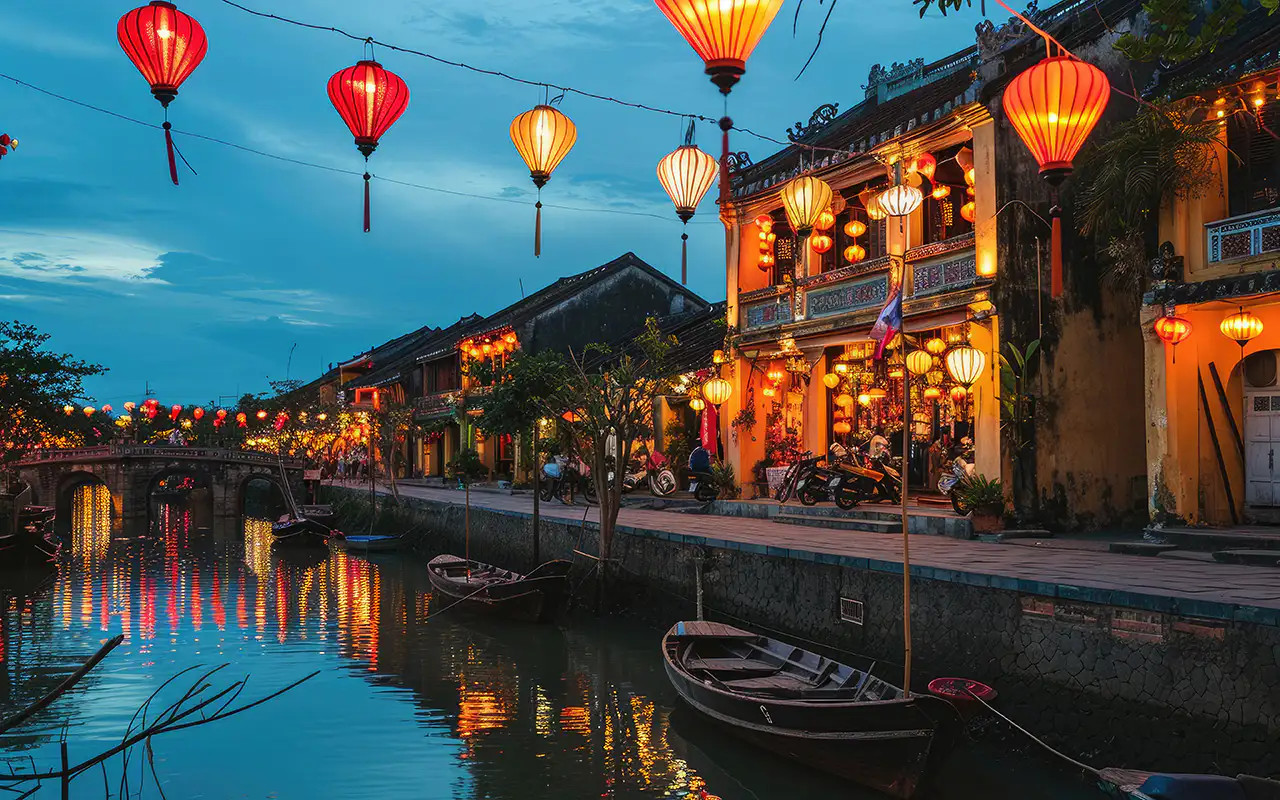
Over 400 historic buildings spanning Chinese temples, Japanese merchant houses, and French colonial architecture. At night, silk lanterns transform the streets into something genuinely magical.
400+ historic buildingsCulinary Capital
Cao lầu, white rose dumplings, and the world’s most famous bánh mì — Hoi An’s food scene is extraordinary. The cooking class scene is Vietnam’s best.
Local specialties found nowhere elseBeach Access
An Bang and Cua Dai beaches are a 15-minute bike ride from the ancient quarter. Culture in the morning, white sand in the afternoon — both in the same day.
5km from Old TownWorld-Class Tailoring
Over 400 tailor shops can produce custom suits, dresses, and shirts in 24–48 hours for a fraction of Western prices. Hoi An is genuinely the world’s tailoring capital.
Custom suits from $80When to Visit Hoi An
Hoi An’s weather is more extreme than you’d expect for a central Vietnam destination. The dry season is genuinely excellent; the wet season brings serious flooding. Timing is more important here than almost anywhere else in Vietnam.

The goldilocks months. Not too hot, comfortable humidity, perfect beach weather. February has Tết festivities. March and April are ideal for cycling, beach time, and exploring the ancient quarter without midday heat exhaustion. Prices are higher and crowds are real, but this is Hoi An at its best.
Excellent beach weather, good swimming conditions, lower prices than peak. The ancient town empties during midday heat — smart visitors explore early morning and late afternoon, retreat to the beach or pool from 11am–4pm. Good shoulder season for heat-tolerant travellers.
October through December can see serious flooding — the Thu Bon River overflows, inundating the ancient quarter waist-deep. November is historically the worst month. Dramatic photographs, thoroughly disrupted travel. If you must visit: book flexible accommodation and check forecasts daily.
On the 14th day of each lunar month, the ancient town switches off electric lights, closes to motorbikes, and illuminates entirely by lanterns. Locals sell traditional snacks, musicians perform in the squares, and you can release floating lanterns on the river. Check the lunar calendar before booking and plan to be in Hoi An for at least one.
| Season | Weather | Pros | Cons | Verdict |
|---|---|---|---|---|
| Feb–Apr | 25–30°C, dry | Perfect weather, Tết festivities, great beach | Higher prices, more tourists | ⭐ Best time |
| May–Aug | 30–35°C, dry | Ideal beach weather, lower prices | Very hot midday, limited sightseeing hours | Good for beach focus |
| Sep–Jan | 20–28°C, wet | Low prices, far fewer tourists | Heavy rain, flooding risk Oct–Dec | ⚠️ Avoid if possible |
Getting to Hoi An
Hoi An has no airport. You’ll fly into Da Nang (30km north) — Vietnam’s fourth-largest city and a major hub with direct flights from across Southeast Asia. The journey from Da Nang Airport to Hoi An is straightforward with several options depending on budget and luggage.

-
🚗Private Car / Pre-booked Taxi — Most Popular 45 minutes on the scenic coastal highway. Driver delivers you door-to-door — essential since Hoi An’s Old Town is car-free and requires a final walking stretch. Pre-book through your hotel for fixed pricing or use a reputable ride-hailing app. Many hotels offer free airport pickup for direct bookings. $15–25 fixed price
-
🚌Airport Shuttle Bus — Budget Option Shuttle buses run hourly from Da Nang Airport to the edge of Hoi An Old Town. Good for travellers with light luggage — you’ll walk or grab a motorbike taxi for the final stretch to your hotel. Journey takes around 1 hour with stops. $5–8
-
🛵Grab Bike — Fastest, Light Luggage Only 35–40 minutes and the cheapest motorised option. Only practical with a small backpack — not viable with suitcases. Not recommended in rain. $8–12
From Other Vietnam Cities
- Hanoi: Fly to Da Nang (1.5 hours, $30–80) — easiest option. Overnight train to Da Nang is an alternative (14 hours).
- Ho Chi Minh City: Fly to Da Nang (1.5 hours, $30–80). Bus is 18+ hours — not recommended.
- Hue: Private car or bus (3–4 hours, $10–40). The scenic coastal route over Hai Van Pass is one of Vietnam’s great drives.
- Nha Trang: Bus (10 hours, $15–25) or fly to Da Nang.
Getting Around Hoi An
Old Town is entirely walkable (1km across). For beaches and countryside, rent bikes ($2–3/day from most hotels). Motorbikes ($5–8/day) are necessary for day trips to Marble Mountains or My Son. Grab motorbike taxis handle everything else, including late-night returns from dinner.
Where to Stay in Hoi An
Location shapes your entire Hoi An experience. Each area offers a completely different trip within the same destination.

Stay inside the UNESCO zone for maximum atmosphere. Wake to lanterns, walk to temples, fall asleep to the river. Pedestrian streets 9am–11pm. Budget guesthouses in traditional wooden houses to boutique heritage hotels — wide range. Can be noisy; request interior courtyard rooms for quieter sleep.
5km from Old Town — a 15-minute flat bike ride. White sand, chilled atmosphere, lower prices than Old Town hotels. Beach clubs and restaurants directly on the sand. Go Old Town in the evening, beach in the morning. Significantly less touristy than Old Town accommodation options.
2–4km from Old Town. Wake to water buffalo and rice paddies. Ultra-quiet resorts with pools and spas. Free bikes for countryside exploration. The morning light through the paddies is extraordinary. Slightly more effort to reach Old Town in evenings.
Many Hoi An hotels offer free airport pickup from Da Nang when you book direct — always ask. Book 2–3 months ahead for February–April stays. Old Town pedestrian rules mean motorbikes cannot reach most hotels during the day — your accommodation should advise exactly where to be dropped off.
Exploring the Ancient Town
Hoi An’s UNESCO Old Town is compact — roughly one square kilometre — and entirely walkable. Buy an Old Town Ticket ($7 at any entrance gate) to access 5 historic sites of your choice from 22 options. Tickets last 10 days, giving you flexibility across your stay.

Must-Visit Historic Sites
Japanese Covered Bridge
Hoi An’s icon. This 18th-century covered bridge connects the Japanese and Chinese quarters, with a small temple to the Northern God inside. Photograph early morning (6–7am) before crowds arrive, or at night when lanterns illuminate the water beneath.
Old Town Ticket requiredAssembly Halls
Chinese merchant communities built ornate assembly halls — half temple, half community centre. Fujian Assembly Hall (dedicated to sea goddess Mazu) is the most elaborate. Cantonese Assembly Hall has a beautiful courtyard garden. All are genuinely extraordinary.
5 included in ticketTan Ky Old House
Best-preserved of the ancient merchant houses. Seven generations of the same family have lived here continuously. The architecture blends Japanese roof construction, Chinese decorative carving, and Vietnamese wood joinery. Flood watermarks on the interior columns tell the house’s story in centimetres.
Still family-occupiedThe Streets Themselves
Tran Phu (main artery with temples), Nguyen Thai Hoc (riverside cafes and boutiques), Bach Dang (sunset from the waterfront), and Le Loi (quiet residential, authentic local life). The unplanned wander is often better than any specific destination.
Free to wanderHoi An’s Beaches
Two main beaches are easily reachable from Old Town by bicycle — An Bang is the clear favourite among travellers who’ve done their research, while Cua Dai is closer and better for families wanting resort facilities.

An Bang Beach (5km)
The locals’ beach. White sand, turquoise water, chilled atmosphere with dozens of beach clubs and restaurants. Rent a sunbed for $2–3 and spend the day. Soul Kitchen, La Plage, and Salt Pub are all excellent. 15-minute flat bike ride from Old Town — or Grab motorbike for $2–3.
Best overall beach · $2 sunbedCua Dai Beach (4km)
Closer to town, several resorts and beach clubs, calmer water that’s well-suited to families. Has suffered some erosion in recent years but still enjoyable for swimming and a beach club afternoon. Better resort infrastructure than An Bang.
Family-friendly · Resort facilitiesOctober through January brings rough seas, jellyfish, and frequent beach closures. The Cham Islands boat tours are routinely cancelled September–February due to sea conditions. Stick to February–September for reliable beach access.
Things to Do in Hoi An

Cooking Classes
Hoi An offers Vietnam’s best cooking classes. Most include a morning market visit, boat ride to a herb farm, hands-on cooking, and eating your creations for lunch. Half-day classes cost $25–35. Morning Glory Cooking School (celebrity chef Ms Vy) and Red Bridge Cooking School (scenic boat ride to a riverside farm) are both outstanding.
$25–35 · Half dayCountryside Cycling
Flat roads through rice paddies, water buffalo pastures, and traditional villages make cycling the ideal way to explore the surroundings. Cam Thanh Village (coconut palm forests and traditional boat builders) and Tra Que Vegetable Village ($2 entrance, organic farms and cooking demos) are both excellent routes.
Bike rental $2–3/dayLantern-Making Workshop
Learn to make Hoi An’s famous silk lanterns in a 1-hour workshop ($10–15). You’ll leave with your own lantern — a genuinely meaningful souvenir that you made yourself, far superior to anything bought from a tourist shop.
$10–15 · 1 hourCham Islands Snorkelling
A speedboat to the pristine island cluster (20km offshore) for snorkelling, beach time, and seafood lunch. Half-day or full-day tours $20–35. Best March–August when seas are calm. One of the few marine protected areas in Vietnam — genuinely clear water and healthy coral.
$20–35 · March–August onlyWhere to Eat in Hoi An
Hoi An’s food scene is justifiably famous. Several local specialties originated here and genuinely cannot be found anywhere else in Vietnam. Start with these before exploring the broader restaurant options.

Must-Try Local Dishes
The noodles are supposedly made using water from a single ancient well — a detail that may be legend but makes for a good story. The dish genuinely cannot be replicated elsewhere: something in the combination of noodle texture, herb selection, and pork preparation is unique to Hoi An kitchens. Try it at Cao Lau Ba Le (local favourite, no-frills) or Morning Glory (refined version with better service).
Only one family in Hoi An knows the correct technique for making the translucent rice paper wrappers — all restaurants serving white rose dumplings source from this single family. The result is remarkably delicate: translucent dough wrapped around shrimp filling, shaped into a rose, topped with fried shallots. Eat at White Rose Restaurant (the original source) or Morning Glory.
Banh Mi Phuong on Phan Chu Trinh Street was declared the world’s best bánh mì by Bourdain on No Reservations, and the queue has barely shortened since. A perfect Vietnamese baguette, properly crispy, stuffed with pork, pâté, house sauce, herbs, and pickled vegetables. For $1.50, it may be the best value meal in Southeast Asia.
Shredded yellow chicken over fragrant rice with herbs and clear broth on the side. The chicken is cooked at exactly the right temperature to maintain juiciness; the rice absorbs the cooking liquid and turmeric. This is what the local H’mong community eats for lunch. Com Ga Ba Buoi has no English menu — point at what others are eating.
Best Restaurants by Budget
The market’s upper floor has a cluster of food stalls serving cao lầu, mi quang, and bánh mì at prices that make tourist restaurants look absurd. Plastic stools, shared tables, no English menus — exactly as it should be. Point at what the person next to you ordered. Spend 40,000 VND on one of the best breakfasts of your trip.
The world’s most famous bánh mì stall. Queue extends beyond the door at peak times but moves fast. Order the “special” with everything. Take it to the riverside to eat — the combination of crispy bread and morning light on the Thu Bon River is one of Hoi An’s best simple moments.
Celebrity chef Trinh Diem Vy’s flagship restaurant, and the best introduction to Hoi An’s signature dishes in a refined setting. The cao lầu, white rose dumplings, and mi quang are all excellently executed. The open kitchen lets you watch the cooking. Reliable, consistently high quality, and worth the slightly higher prices.
The best riverside views in Hoi An combined with a menu that covers both Vietnamese specialties and well-executed Western food — good for groups with mixed dietary preferences. The upstairs terrace at sunset is one of the town’s great dining moments. The cocktail list is ambitious for this part of Vietnam.
Hidden in an interior courtyard down a narrow alley, The Secret Garden is Hoi An’s most atmospheric fine dining experience — multi-storey wooden house, fairy lights strung between carved balconies, a tasting menu focused on local and regional Vietnamese ingredients. Reservations essential for evening seatings.
Shopping in Hoi An
Custom Tailoring
Hoi An is legitimately the world’s tailoring capital. Over 400 tailor shops can produce custom clothes from photographs and measurements in 24–48 hours. Bring reference photos from your phone, choose fabric from swatches, get measured, and return for fittings. The quality range is enormous — from excellent at reputable shops to disappointing at budget operations.

Allow 3–4 days minimum for best results — 2 fittings are essential for anything complex. Bring reference photos, be extremely specific about what you want (style, buttons, lining, pockets), and check stitching, seams, and fit carefully at each fitting. Reputable shops: Yaly Couture (higher end, $150–300 suits), Kimmy Tailor (quality-price balance), and A Dong Silk (own fabric factory, best material quality). Avoid shops quoting rock-bottom prices for complex garments.
Best Souvenirs
- Silk lanterns — Buy direct from lantern-making workshops at better prices than tourist shops. The handmade versions are substantially better quality.
- Vietnamese coffee — Ground coffee and whole beans from the Central Market at prices far below airport shops. Robusta beans from the Central Highlands are excellent.
- Lacquerware — Beautiful bowls, boxes, and decorative pieces from local artisans. Bargain at market stalls; fixed prices at Reaching Out (fair trade, supports disabled artisans).
- Ceramics — Local pottery villages produce traditional Vietnamese ceramics. Thanh Ha Pottery Village (2km from Old Town) is the authentic source.
Day Trips from Hoi An

My Son Sanctuary
UNESCO World Heritage Hindu temple complex built by the Champa Kingdom (4th–14th century) — Vietnam’s answer to Angkor Wat, though smaller and far less visited. Red brick towers set in a jungle valley with a river running through. Go early (7am tour) before heat and tourist buses arrive.
$15–25 with guide and transportDa Nang City
Vietnam’s fifth-largest city offers a complete contrast to Hoi An’s ancient pace. Visit Marble Mountains (limestone hills with caves and temples), watch Da Nang’s Dragon Bridge breathe fire on weekend nights, explore Son Tra Peninsula beaches, and eat at exceptional seafood restaurants along My Khe Beach.
$8–15 one-way transportBa Na Hills & Golden Bridge
The viral Golden Bridge — a walkway seemingly held aloft by two giant stone hands — sits atop a French colonial hill station now converted into a theme park. Unabashedly touristy and Instagram-focused, but the cable car ride through clouds and the mountain views are genuinely impressive. Full day trip.
$30–40 including cable carCham Islands
Speedboat to a pristine island cluster in a UNESCO biosphere reserve — snorkelling, white sand beaches, and fresh seafood lunch on the island. One of the few spots in Vietnam with genuinely clear water and healthy coral. Half-day or full-day tours. Only viable March–August (rough seas cancel tours in winter).
$20–35 per personPractical Tips
How Long to Stay
Minimum 2 nights to see Old Town highlights and get to a beach. 3–4 nights is the ideal for a first visit — adds a cooking class, countryside cycling, tailoring appointment, and a relaxed pace. 5+ nights makes sense if adding serious beach time, My Son, and getting clothes made properly (which requires multiple fittings).
| Budget Level | Daily Cost | What You Get |
|---|---|---|
| Shoestring | $30–50 | Budget guesthouse, market meals, free walking, bike rental. |
| Comfortable | $50–100 | Boutique hotel, mid-range restaurants, cooking class, beach day. |
| Splurge | $100–200+ | Heritage hotel, fine dining, spa, private tours, Yaly suits. |
Cultural Etiquette
- Remove shoes when entering homes, some temples, and many traditional shops — follow the host’s lead.
- Dress modestly in temples and assembly halls: cover shoulders and knees. Sarongs available to borrow at most sites.
- Ask permission before photographing locals, especially during festivals and market scenes.
- The Old Town ticket system is honest: buy it, use it. Attempting to slip into heritage sites without tickets wastes local conservation resources.
- Bargaining is expected at markets and souvenir stalls. It is not appropriate at restaurants, tailor shops with fixed prices, or cafes.
Hoi An is very safe. Violent crime is virtually nonexistent. Drink bottled water — ice at established restaurants is usually fine. Street food is generally safe where locals eat. Watch for motorbikes on pedestrian streets even during restricted hours. Sun protection (SPF 50+) is essential from April through October.
Frequently Asked Questions
How many days do I need in Hoi An?
3–4 days is ideal for a first visit. This gives you time to explore the ancient town, take a cooking class, visit a beach, cycle the countryside, and have at least one tailor appointment. If you want clothes made properly (two fittings minimum) or plan day trips to My Son or Da Nang, 5 nights works better. Absolute minimum is 2 nights.
What is the best time to visit Hoi An?
February to May offers the best conditions — dry weather, comfortable temperatures (25–30°C), and calm seas for the Cham Islands. February has Tết festivities with special decorations. March and April are the sweet spot before summer heat arrives. Avoid October–December due to flooding risk — the Thu Bon River can overflow and inundate the ancient town waist-deep.
Do I need to buy an Old Town ticket?
Yes, to enter any of the 22 historic sites. The $7 ticket grants entry to 5 sites of your choice and is valid for 10 days. You can walk the streets freely without a ticket, but you need it to enter old houses, assembly halls, and the Japanese Covered Bridge interior. Buy at any entrance checkpoint.
Are Hoi An’s tailors actually good quality?
Quality varies enormously. The reputable shops — Yaly Couture, Kimmy Tailor, A Dong Silk, Bebe Tailor — produce excellent work comparable to good Western tailors at a fraction of the cost. Budget shops with suspiciously low prices deliver budget quality. Allow 3–4 days minimum for two proper fittings, bring detailed reference photos, and be specific about every detail during consultations. Don’t commit to rush jobs for complex garments.
Is Hoi An good for families with young children?
Yes — Hoi An is excellent for families. The Old Town is pedestrian-friendly and safe for children to explore. Beaches at An Bang and Cua Dai have calm, shallow water suitable for kids. Cooking classes and lantern-making workshops are child-friendly activities. Beach resorts at Cua Dai offer kids’ clubs and pools. The manageable scale of the town means nothing is far from anything else.
What’s the Full Moon Lantern Festival like?
It’s genuinely one of the most beautiful nights in Southeast Asia travel. Electric lights switch off, the ancient town becomes car-free, and silk lanterns illuminate every street, bridge, and the river. Traditional music performances fill the squares, vendors sell local snacks, and you can release paper lanterns on the water for around $1–2. The atmosphere is magical in a way that photographs don’t fully capture. Check the lunar calendar before booking your trip.
Just got back from 5 nights in Hoi An. The Full Moon Lantern Festival tip is 100% worth planning around — we happened to be there on the 14th lunar day and it was genuinely one of the most beautiful evenings I’ve experienced anywhere. The bánh mì at Phuong really is as good as the reputation. Thank you for the tailoring advice too — went to Yaly and the suit jacket is perfect.
We visited in November (I know, I know — flooding season) and got lucky with mostly dry days, but the final day saw the ancient town knee-deep in water. It looked incredible in photos but we couldn’t actually access anything. Your warning about November is completely accurate. Lesson learned for next time.
Sorry to hear about the flooding, Daniel — but glad you got mostly dry days first! November is the highest-risk month. The flooding photographs are genuinely dramatic, but being unable to reach any of the sites is a different experience from what most people plan for. Next time in February or March — you’ll see a completely different town.