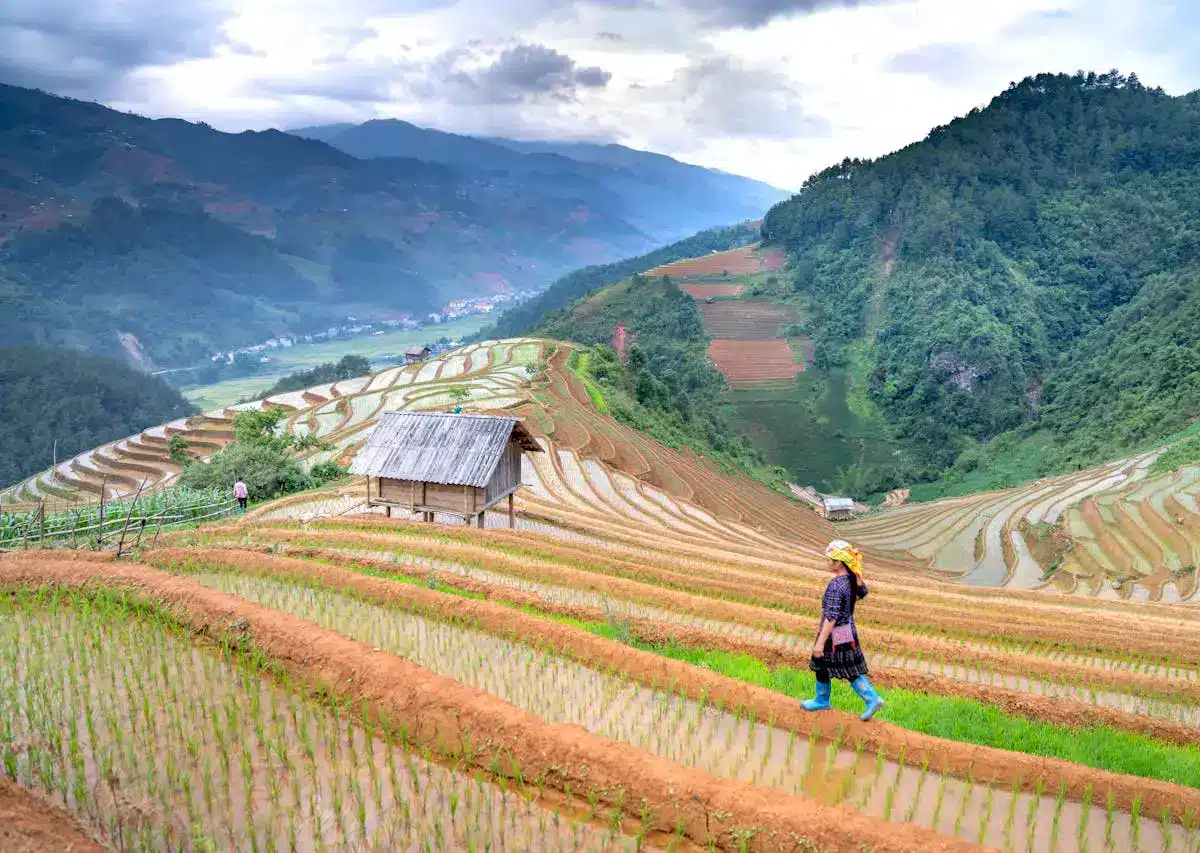
Nestled in the Hoàng Liên Sơn mountain range near the Chinese border, Sapa is one of Vietnam’s most enchanting destinations. At an elevation of 1,600 meters, this former French hill station offers a refreshing escape from the lowland heat, with dramatic mountain scenery, cascading rice terraces, and rich cultural encounters with ethnic minority groups.
Whether you’re a trekking enthusiast, a culture seeker, or a photographer hunting for that perfect shot of golden rice terraces, Sapa delivers an authentic and unforgettable Vietnamese mountain experience.
Start with the practical stuff: my 3-day Sapa itinerary is the most-read guide on this site — a tested, day-by-day plan built around the rice terraces, Muong Hoa Valley trekking, and Fansipan.
- 🏔️ Elevation: 1,600m above sea level
- 👥 5 ethnic minority groups: H’mong, Red Dao, Tay, Giay, Xa Pho
- ⛰️ Gateway to Fansipan — Indochina’s highest peak at 3,143m
- 🚆 320km / 5 hours from Hanoi by overnight train
Why Visit Sapa?

1. Spectacular Landscapes
Sapa’s terraced rice fields are legendary. The valleys of Muong Hoa, Lao Chai, Ta Van, and Y Linh Ho transform with the seasons — emerald green in planting season, golden yellow during harvest. Add in dramatic waterfalls, misty peaks, and Fansipan looming overhead, and you have one of Asia’s most photogenic destinations.
2. Authentic Cultural Experiences
Home to the H’mong, Red Dao, Tay, Giay, and Xa Pho people, Sapa offers genuine cultural immersion. Visit traditional villages like Cat Cat and Ta Van, shop at colorful weekend markets, learn traditional crafts like indigo dyeing, and stay overnight in a local homestay.
3. World-Class Trekking
From easy half-day village walks to challenging multi-day mountain treks, Sapa caters to all fitness levels. Trek through rice paddies, cross bamboo bridges, conquer Fansipan’s summit, and sleep in remote villages far from tourist crowds.
When to Visit Sapa?

September to November — Peak Season
The golden rice harvest season is Sapa at its most spectacular. The terraced fields turn brilliant shades of yellow and gold, creating postcard-perfect landscapes. Weather is clear and dry with comfortable temperatures (15–20°C), excellent visibility for mountain views, and ideal trekking conditions.
March to May — Shoulder Season
Spring brings vibrant green rice fields as farmers plant new crops. Wildflowers bloom across the valleys, temperatures warm up (18–25°C), and you’ll find fewer crowds than autumn. Occasional rain showers keep everything lush and fresh.
Perfect for: Photographers who want dramatic green landscapes and travelers seeking better value with smaller crowds.
Winter (December – February) — Pack Warm!
Winter in Sapa is seriously cold. Temperatures can drop to 0°C, and frost is common. If you’re lucky, you might catch snow on Fansipan — a rare sight in Vietnam. However, dense fog often limits visibility, and many trails become muddy and slippery.
Summer (June – August)
The monsoon season brings heavy rainfall, making trails muddy and challenging. Fog and clouds often obscure views, and leeches appear on trekking paths. The upside? Lowest prices of the year, lush green scenery, and virtually empty trails.
Best for: Budget travelers who don’t mind rain and experienced trekkers comfortable with challenging conditions.
Seasonal Comparison
| Month | Temperature | Rice Fields | Crowds | Verdict |
|---|---|---|---|---|
| January – February | 5–15°C | Brown / fallow | Low | Cold, possible snow |
| March – May | 15–25°C | Bright green | Medium | Excellent |
| June – August | 20–28°C | Lush green | Low | Rainy, muddy trails |
| September – November | 15–20°C | Golden yellow | High | Peak season |
| December | 5–12°C | Harvested | Low | Cold, foggy |
October is peak season — golden rice terraces, clear skies, perfect trekking temperatures. But April’s mirror-flooded paddies are arguably more dramatic, and January’s mist and occasional snow create a completely different atmosphere. Every season has a case. The month-by-month weather guide tells you exactly what to expect and when to book.
Getting to Sapa from Hanoi
Most travelers reach Sapa from Hanoi, located 320 kilometers (200 miles) to the southeast. You have three main options:

The overnight train is a classic way to reach Sapa, maximizing your time and saving on accommodation. Trains depart Hanoi between 9–10 PM, arriving at Lao Cai station (35km from Sapa) around 5–6 AM. From there, shuttle buses or taxis complete the final hour to Sapa town.
Book soft sleeper cabins with reputable operators like Victoria Express, Sapaly Express, or King Express for the most comfortable journey. These private trains have 4-berth cabins with clean linens, air conditioning, and better service than standard government trains.
Modern sleeper buses take 5–6 hours and drop you directly in Sapa town — no train transfers needed. Companies like Sapa Express, Eco Sapa, and Good Morning Sapa offer reclining seats, air conditioning, and onboard toilets.
- Pros: Direct to Sapa, daytime options available, cheaper than train
- Cons: Winding mountain roads can cause motion sickness, less romantic than the train
Hiring a private car gives you complete flexibility — stop for photos, meals, or side trips whenever you want. The 5–6 hour journey through rural northern Vietnam is scenic, passing through rice paddies, mountain villages, and the Red River Valley.
Where to Stay in Sapa
Your accommodation choice in Sapa fundamentally shapes your experience. Stay in town for convenience and amenities, or venture into the villages for authentic cultural immersion.

Sapa has accommodation across every budget — $12 dorm beds to $250 mountain lodges with infinity pools overlooking the terraces. Location matters more than star rating here. My complete Sapa hotels guide covers 15+ tested properties across all price points, with an honest breakdown of which areas to stay in for different trip types.
Sapa Town Hotels
Sapa town sits at the heart of the action, with easy access to restaurants, shops, ATMs, and tour operators. Most hotels offer valley views, and you can walk to nearby villages like Cat Cat in 30 minutes.
Luxury ($80–200/night)
- Hotel de la Coupole — French colonial elegance meets modern luxury. Central location, spa, excellent restaurant.
- Pao’s Sapa Leisure Hotel — Stunning valley views from every room. Rooftop bar and spa.
- Amazing Hotel Sapa — Modern design with floor-to-ceiling windows overlooking rice terraces.
Mid-Range ($30–80/night)
- Sapa Elegance Hotel — High ratings for cleanliness, helpful staff, and breathtaking valley views.
- Sapa Paradise View Hotel — Family-friendly with spacious rooms and knowledgeable tour desk.
- Chau Long Sapa Hotel — Good value with comfortable beds and central location.
Budget ($10–30/night)
- Sapa Backpackers — Social hostel with dorm beds and private rooms. Easy to meet other travelers.
- Cat Cat View Hotel — Simple but clean rooms with hot water. Great budget option.
- Royal Sapa Hotel — Family-run guesthouse with friendly owners who help arrange tours.
Village Homestays — Authentic Experience
Staying in an ethnic minority village offers profound cultural exchange you simply can’t get from a hotel. You’ll sleep in a traditional stilt house, share meals with your host family, and experience daily village life.
- Accommodation: Basic sleeping arrangements — typically mattresses on the floor, communal living spaces, shared bathrooms with squat toilets.
- Meals: Home-cooked Vietnamese mountain cuisine served family-style. Think grilled pork, vegetables, rice, and often corn wine.
- Cost: $10–20 per person per night, usually includes dinner and breakfast.
Best Villages for Homestays
- Ta Van Village— Most developed homestay infrastructure, 8km from town. Great for first-timers.
- Lao Chai Village— More authentic, less touristy. Richer cultural experience.
- Ta Phin Village— Further from town (12km), known for herbal baths and traditional embroidery.
- Cat Cat Village— Closest to town (2km), most commercialized but convenient.
Best Things to Do in Sapa

Trekking & Hiking
Trekking is THE reason most people visit Sapa. Trails wind through terraced rice paddies, bamboo forests, and remote ethnic minority villages, offering everything from easy walks to challenging multi-day expeditions.
The range of options is wider than most visitors expect — from 2-hour village walks to 2-day homestay expeditions deep into Muong Hoa Valley. The trekking tours guide reviews every major route and operator with honest difficulty ratings.
Easy Treks (2–4 hours)
- Cat Cat Village— Paved path descending from Sapa town past rice terraces and a waterfall. 2km, easy descent.
- Y Linh Ho Village— Gentle 7km trek through stunning rice terraces. Classic Sapa scenery.
Moderate Treks (4–6 hours)
- Lao Chai – Ta Van Loop— Sapa’s most popular day trek. Descend through terraced valleys, cross bamboo bridges.
- Ta Phin Village— Trek through beautiful scenery to meet the Red Dao people. Optional herbal bath.
Multi-Day Treks (2–3 days)
- Sapa – Bac Ha Loop— Remote villages, Sunday market visit, authentic homestays.
- Muong Hoa Valley Circuit— Classic overnight trek. Sleep in Ta Van or Lao Chai village. $60–120 including guide.
Conquer Fansipan
At 3,143 meters, Fansipan is the highest peak in Indochina. You have two ways to reach the summit:
The world’s longest cable car (6,325m) whisks you from Sapa to the summit in 20 minutes. At the top: Buddhist temples, viewpoints, and that summit photo everyone wants. Go early (7–8 AM) for clearer skies.
The proper mountaineering route requires excellent fitness and a guide. Camp at 2,800m, summit at sunrise. Only for serious trekkers.
Explore Local Markets
- Sapa Weekend Market— Friday–Saturday night in town. Handicrafts, textiles, and produce.
- Bac Ha Sunday Market— The real deal. Massive market where ethnic minorities trade livestock and goods.
- Can Cau Saturday Market— Near Chinese border. Even more authentic with fewer tourists.
Cultural Experiences
- Textile Workshops— Learn traditional indigo dyeing from H’mong artisans. Several workshops in Cat Cat village offer hands-on classes.
- Cooking Class— Prepare traditional H’mong dishes using mountain vegetables and local techniques. Several hotels and tour operators offer half-day classes.
- Traditional Music— Saturday nights often feature traditional music performances in Sapa town square.
The rice terraces of Muong Hoa Valley in late September and October are among the most photographed landscapes in Southeast Asia. The Sapa photography guide maps the 7 best viewpoints, explains the light timing that makes the difference, and covers ethical portrait photography in ethnic minority villages.
Sapa Itineraries
2 Days in Sapa (Weekend Trip)
Arrive morning, Cat Cat Village trek (3 hours), explore town, evening at night market.
Full-day Lao Chai – Ta Van trek (5–6 hours), return to Hanoi evening.
3 Days in Sapa (Recommended)
Arrive, explore Sapa town and Cat Cat Village, evening at night market.
Full-day Muong Hoa Valley trek with overnight homestay in Ta Van village.
Return to Sapa morning, Fansipan cable car to summit, depart evening.

Three days is the sweet spot for a first visit — enough for the valley trek, Fansipan, and genuine village time without rushing. See the full 3-day Sapa itinerary for an hour-by-hour breakdown including logistics, costs, and alternatives.
4–5 Days in Sapa (Complete Experience)
Add: Day trip to Bac Ha Sunday market, Ta Phin village trek, motorbike tour to remote villages. Five days gives you time to genuinely slow down, make friends with your homestay family, and explore beyond the standard tourist routes.
Where to Eat in Sapa

Local Specialties to Try
- Thắng Cố— Horse meat hotpot. Controversial but deeply traditional H’mong dish.
- Grilled Dishes— Pork, chicken, and river fish grilled over charcoal.
- Salmon Hotpot— Fresh trout from local streams. Light and healthy.
- Sticky Rice— Various colors made from different rice varieties.
- Corn Wine— Potent homemade alcohol. One small glass is polite!
Recommended Restaurants
- Hill Station Deli— Western comfort food and excellent coffee. $5–10 per meal.
- Delta Restaurant— Italian-Vietnamese fusion. Great pizza and pasta. $7–12.
- Nature View Restaurant— Floor-to-ceiling windows overlooking valley. $6–10.
- Little Sapa Restaurant— Budget-friendly Vietnamese. Pho and stir-fries. $3–6.
Sapa’s food scene is shaped by altitude, mountain farming, and ethnic minority culinary traditions — not by lowland Vietnamese cooking. Thắng cố, salt-fermented mountain pork, bamboo sticky rice, and grilled Sapa trout are in a completely different category from what you’ll eat elsewhere in Vietnam. The Sapa food guide tells you what to order, where, and what to avoid.
Practical Tips for Visiting Sapa
What to Pack

Money & Costs
| Traveler type | Daily budget | Accommodation | Food |
|---|---|---|---|
| Budget | $20–35/day | Hostel / homestay | Street food, local restaurants |
| Mid-range | $50–80/day | Nice hotel | Restaurants, guided tours |
| Comfort | $100–150/day | Luxury lodge | Nice meals, private tours |
Safety & Health
- Sapa is very safe. Violent crime is virtually nonexistent. Normal precautions apply.
- Watch for slippery trails after rain. Use trekking poles if available.
- Drink bottled water only. Available everywhere for 10,000–15,000 VND ($0.40–0.60).
- Basic medical clinic in town for minor issues. Serious cases go to Lao Cai hospital (1 hour) or back to Hanoi.
Dealing with Vendors
H’mong women selling handicrafts may follow you on treks, offering to guide you (expecting you to buy their goods afterward). This is normal and not aggressive. Politely decline if not interested: “No thank you, I have a guide.”
If you accept their company on the trail, they’ll expect you to purchase something at the end. Haggling is expected — start at 40–50% of the asking price. Fair prices: scarves $3–5, bracelets $1–2, bags $5–10.
Responsible Tourism
- Give candy or money to children — this encourages begging and interrupts their education.
- Photograph people without asking — always request permission, especially in traditional dress.
- Dress immodestly in villages — cover shoulders and knees in rural, traditional Vietnam.
- Litter — pack out all trash, especially on trekking trails.
- Most hotels have decent wifi (3–10 Mbps)
- 4G coverage in Sapa town, spotty in remote villages
- Buy a Vietnamese SIM card in Hanoi (Viettel has best coverage): 100GB data for $5–7/month
Frequently Asked Questions
How many days do I need in Sapa?
Minimum 2 days, ideally 3 days. Two days allows one full trekking day plus arrival/departure. Three days gives you time to trek, experience a homestay, and visit Fansipan or a market.
Is Sapa worth visiting?
Absolutely yes if you enjoy hiking, mountain scenery, and cultural experiences. The terraced rice fields are spectacular, and the trekking is world-class. Even if you’ve traveled widely in Southeast Asia, Sapa offers something genuinely different.
Can I visit Sapa in one day?
Not recommended. The journey from Hanoi takes 5–9 hours each way, leaving almost no time in Sapa itself. Budget at least 2 days/1 night minimum.
Is Sapa safe for solo travelers?
Very safe. Solo travelers (including women) report feeling completely secure. Violent crime is virtually nonexistent. The main issues are trail safety (slippery paths after rain) and petty hassle from persistent vendors.
Do I need a guide in Sapa?
Not required but highly recommended, especially for longer treks. Guides provide cultural context, help navigate trails safely, and serve as translators for village interactions. H’mong women guides are particularly knowledgeable and hiring them directly benefits local communities.
What’s the best way from Hanoi to Sapa?
Night train for the experience, luxury bus for speed. Both cost $15–60 depending on class. The train is a journey in itself — 4-berth sleeper cabins, dinner, and waking up in the mountains. The bus is more practical for day travelers.
How much does Sapa cost?
$30–50 per day on average. Budget travelers: $20–30/day (hostel, street food, self-guided treks). Mid-range: $50–80/day (nice hotel, restaurants, guided tours).
Is the Fansipan cable car worth it?
Yes for views, questionable for value at Vietnamese price standards. At $35 return, it’s expensive — but you’ll summit Indochina’s highest peak in 20 minutes. Go early morning (7–8 AM) for best visibility before clouds roll in.
Ready to explore Vietnam’s mountain paradise?
Sapa delivers everything a great mountain destination should: dramatic natural beauty, rich cultural encounters, and adventure opportunities for all levels. The key is timing your visit right, booking accommodations early during peak season, and building in enough time to truly experience the villages — not just photograph them.
This is hands down the best Sapa guide I’ve found. We used your 3-day itinerary and it was perfect — even the timing for the cable car worked out exactly as you described. The homestay in Ta Van was the highlight of our entire Vietnam trip. Thank you!
Quick question about the night train — we’re a group of 4. Should we book two separate 2-person cabins or is a 4-berth cabin available? Also, which operator do you recommend for first-timers?
Great question! 4-berth cabins are available on all main operators — that’s actually the better choice for a group of 4. You’ll have the whole cabin to yourselves. I’d recommend Sapaly Express for first-timers: reliable, clean, great staff, and the booking process is straightforward. King Express is also good but slightly harder to book online.