
Sapa’s Four Seasons at a Glance
I’ve visited Sapa in six different months over the past few years — scorching July rain, misty October rice harvest, freezing January fog, and the explosion of cherry blossom in late February. Each visit felt like a completely different destination. That’s both Sapa’s greatest appeal and what makes it genuinely tricky to plan.

The short answer: September to November is the best overall window, when the rice terraces turn gold for harvest, skies are clear, and temperatures are perfect for trekking. But “best” depends heavily on what you’re after. Budget travellers find excellent deals in summer. Winter brings rare snowfall. Spring blooms are dramatically underrated by most visitors.
Golden rice terraces, clear blue skies, perfect trekking temperatures. The most popular and most rewarding window.
✓ Best OverallCherry blossoms, plum flowers, flooded terrace mirrors. Fewer crowds, lower prices — the savvy traveller’s secret.
↑ Great ValueLush valleys, thundering waterfalls, but heavy rain and muddy trails. Cheapest prices of the year.
⚡ Rain SeasonOccasional snow on Fansipan, festive Tết markets, first spring blossoms in late February. Cold but magical.
❄️ Snow PossibleOnce you’ve locked in your travel window, the complete Sapa travel guide covers everything else you need — transport, accommodation, trekking, food, and what to pack — all in one place.
Peak Season: September to November
This is the window almost every experienced Sapa traveller will point you toward — and for good reason. The monsoon rains taper off in late August, leaving the air crisp and clear. The rice terraces, planted in spring and cultivated through summer, reach their spectacular peak: brilliant gold and amber fields cascading down the mountainsides of Muong Hoa Valley.

Temperatures hover between 15°C and 22°C during the day — genuinely ideal for trekking. Nights get cold (8–13°C), so pack a mid-layer. October is the single best month for photography: harvest activity fills the terraces with Hmong and Dao farmers, and the contrast of golden rice against deep green jungle creates images you’ll struggle to believe you took yourself.
🌾 What Makes September–November Special
- Golden rice terraces: The defining image of Sapa. Peak harvest runs late September through mid-October.
- Perfect trekking conditions: Trails are dry, temperatures comfortable, visibility excellent all day.
- Cultural immersion: Village markets, harvest festivals, and traditional ceremonies in full swing.
- Clearest mountain views: Fansipan summit is most accessible, with lowest cloud cover of the year.
September to November is peak trekking season — trails dry, views clear, villages active. My trekking tours guide recommends the best routes and operators for each season, including which treks make the most of the October harvest scenery.
October in Sapa is like August in Paris. Hotels sell out 6–8 weeks in advance, train sleeper cabins disappear in days, and tour operators run full groups daily. If you’re visiting September–November, book everything — accommodation, transport, and trekking tours — as far ahead as possible.
The best Sapa hotels guide highlights which properties book out first and which areas give you the best views during harvest season.
Spring: March to May
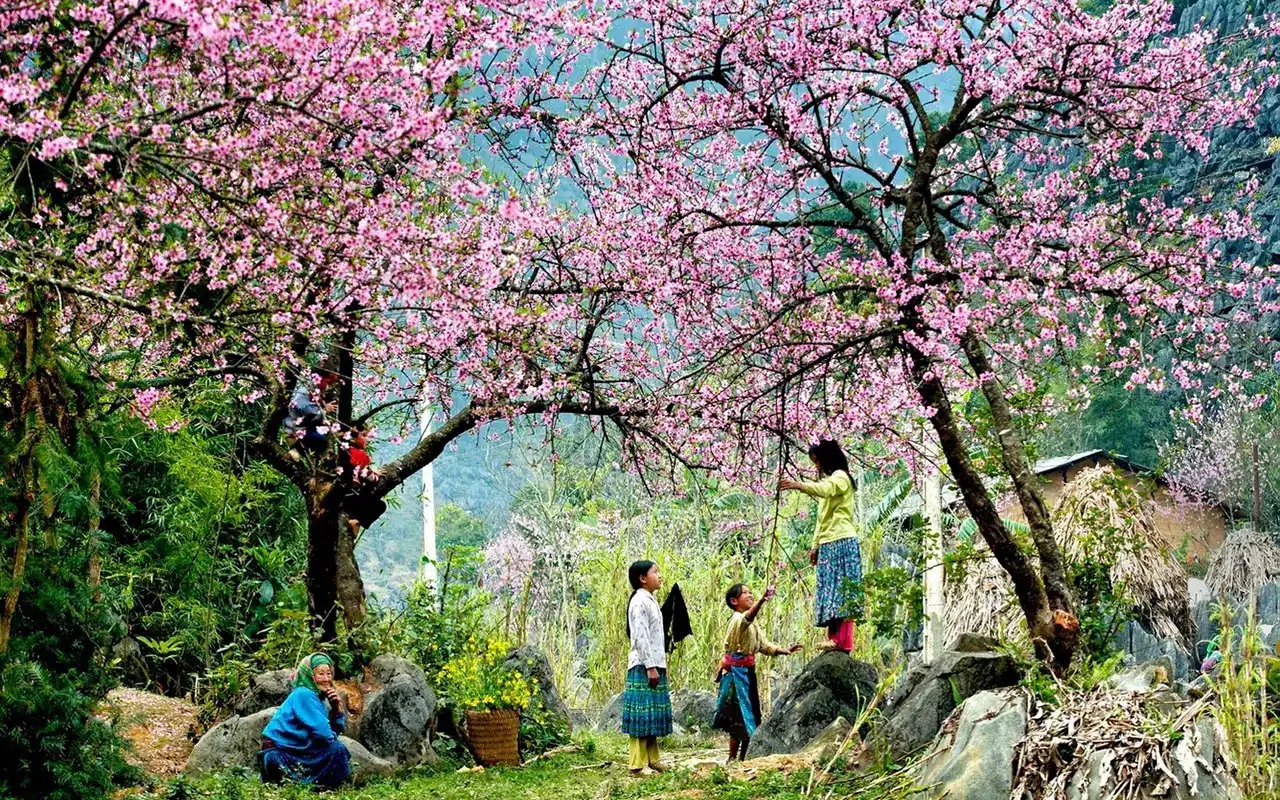
Spring is Sapa’s most underrated window. After the winter fog lifts in March, the valley erupts with plum and peach blossoms — clouds of pale pink against the dark mountain backdrop. By April and May the rice paddies are flooded and planted, turning the terraces into mirror-like pools reflecting the sky. It’s a photographer’s paradise — a different kind from autumn, but arguably as beautiful.

Temperatures are mild and warming (14–22°C), rainfall is moderate and usually confined to short afternoon showers, and crowds are noticeably lighter than the October peak. Hotels offer better availability and often reduced rates. April and early May are, in my opinion, the best-kept secret months for visiting Sapa.
Visit the Bac Ha Sunday Market (90 minutes from Sapa) in April or May. It’s one of the most colourful hill-tribe markets in Vietnam and far less touristy than the Sapa market. Pair it with a night in Bac Ha for a genuinely off-the-beaten-track experience.
Summer: June to August
Sapa’s summer is the monsoon season — and it earns that description fully. June through August brings heavy, persistent rain, high humidity, and muddy trekking trails. Leeches appear on forest paths. Visibility in the mountains drops. The terraces, while lush and intensely green, lack the drama of autumn gold.
That said, the mountains wear an extraordinary emerald green, waterfalls like Silver Falls and Love Waterfall thunder at full power, and you’ll share them with almost nobody. Prices are at their lowest of the year.
Trekking in July or August requires full waterproof gear, leech socks, and a very flexible attitude. Flash floods and landslides occasionally close the road between Lào Cai and Sapa. Build buffer days into your itinerary and don’t plan anything time-sensitive around outdoor activities.
Winter: December to February
Winter in Sapa is polarising. December and January bring heavy fog, temperatures that drop to 0°C or below at night, and occasional snowfall on Fansipan and the surrounding peaks — a genuinely surreal sight in Southeast Asia. The town takes on an eerie, beautiful quality when blanketed in mist, and rare snow days draw Vietnamese domestic tourists en masse.

February is the transition month and potentially the most magical. Tết (Lunar New Year, usually late January to mid-February) brings festive markets, traditional costumes, and celebratory energy to the hill-tribe villages. Late February sees the first cherry and plum blossoms emerge — a stunning preview of spring.
Tết is Vietnam’s biggest holiday. During this period, domestic tourism surges massively, hotels fill at premium prices, transport is chaotic, and many local restaurants and services close. Plan carefully, or avoid entirely unless experiencing Tết is specifically your goal.
During Tết and the October peak, trains and buses from Hanoi book up fast. See the Hanoi to Sapa transport guide for exact booking windows and what to do if your preferred option sells out.
Month-by-Month Breakdown

Here’s what to realistically expect in Sapa every month of the year.
January — Cold, Foggy, Quiet
The coldest month. Nights regularly drop to 2–5°C. Heavy fog is common, sometimes lingering for days. Snow falls on Fansipan most years. Trekking is challenging but there’s a haunting beauty to the mist-shrouded valleys. Very quiet between holiday periods.
February — Tết & First Blossoms
Tết transforms Sapa into a festival town with colourful hill-tribe markets. In the final weeks, cherry and plum blossoms begin appearing against the winter mountains. Prices spike sharply during Tết week — book very early or avoid completely if you dislike crowds.
March — Spring Arrives
The fog lifts and Sapa blooms. Plum and peach blossoms peak in early March. Temperatures warm quickly, trails dry out, crowds are moderate and prices fair. One of the most underappreciated months to visit — great for photographers and first-timers alike.
April — Flooded Terrace Mirrors
Rice paddies are flooded and planted, turning the terraces into extraordinary mirror pools that reflect the sky. The sunrise and sunset light at this time is arguably more dramatic than autumn gold. One of the most photogenic months in Sapa — and still relatively crowd-free.
See the Sapa photography guide for the best viewpoints and light timing that make the most of April’s mirror reflections.
May — Deep Green Valleys
The terraces are a vivid, uniform green as the rice grows. Rain starts to increase from mid-May but remains manageable. Temperatures are warm and pleasant. A solid month to visit before the full monsoon arrives — good value, uncrowded, and genuinely beautiful.
June — Monsoon Begins
The rainy season kicks in properly. Daily downpours are common, trails get slippery, and waterfalls start to boom. The landscapes are intensely lush but mountain visibility drops significantly. Best prices are starting. Only visit if genuinely comfortable with rain and mud.
July & August — Peak Monsoon
The wettest months of the year. Trails are extremely muddy, leeches are active on forest paths, and road closures occasionally occur. That said, the mountains wear an extraordinary emerald green, waterfalls like Silver Falls and Love Waterfall thunder at full power, and you’ll share them with almost nobody. Full waterproof gear is essential.
September — Harvest Season Opens
The rain tapers off and the terraces begin turning gold in the lower valleys. Early September still carries some rain but late September is glorious — possibly the best single month to visit Sapa in terms of value versus spectacle. Book well ahead; savvy travellers are already arriving.
October — The Single Best Month
Peak of the rice harvest. Muong Hoa Valley turns amber and gold from edge to edge. Skies are clear and blue. Temperatures are perfect for all-day trekking. Villages buzz with harvest activity and ethnic minority festivals. This is the undisputed best month to visit Sapa — and the most competitive for accommodation and tours.
November — Post-Harvest, Still Stunning
The harvest is done but the terraces are cut into beautiful geometric patterns against the hillsides. Crowds reduce noticeably from the October peak. Temperatures cool sharply toward month-end. A quieter, cheaper alternative to October — excellent for travellers who missed the peak but still want great conditions.
December — Cold, Misty, Quiet
Winter arrives with persistent fog and dropping temperatures. The terraces are bare and the rice has long been harvested, but the mist creates an atmospheric, almost mystical landscape. Good for those seeking solitude and low prices. Pack warm layers — the damp mountain air feels significantly colder than the numbers suggest.
Sapa Weather & Conditions at a Glance
| Month | Avg Temp | Rainfall | Trekking | Crowds |
|---|---|---|---|---|
| January | 4–13°C | Low | Poor | Very Low |
| February | 6–16°C | Low | Fair | Low–Very High (Tết) |
| March | 10–20°C | Light | Good | Moderate |
| April | 14–23°C | Moderate | Good | Moderate |
| May | 17–26°C | Moderate | Good | Moderate |
| June | 18–26°C | Heavy | Poor | Low |
| July | 19–27°C | Very Heavy | Poor | Very Low |
| August | 19–27°C | Very Heavy | Poor | Very Low |
| September Great | 16–24°C | Low–Moderate | Excellent | High |
| October Best | 14–22°C | Very Low | Excellent | Very High |
| November | 10–18°C | Low | Very Good | High |
| December | 5–14°C | Low | Fair | Low |
Found your perfect month? Secure your accommodation before it sells out. Browse 150+ Sapa properties — free cancellation on most listings.
Frequently Asked Questions
What is the absolute best month to visit Sapa?
October is the undisputed best month. The rice terraces are at peak gold, skies are clear and blue, trekking is ideal, and the valley is alive with harvest activity. The trade-off: it’s the most crowded and expensive month — book 6–8 weeks in advance for accommodation and transport.
Can you visit Sapa in the rainy season?
Yes, but go in with realistic expectations. June to August brings heavy daily rain, muddy trails, and limited mountain visibility. The landscapes are lush and the prices are the lowest of the year. Pack full waterproof gear, leech socks for trekking, and build flexibility into your schedule for trail closures.
Does it actually snow in Sapa?
Yes — Sapa gets snowfall most winters, typically in January and occasionally in February. Snow in town is rare and unpredictable, but more reliable on Fansipan summit at 3,143 m. When snow falls in town, Vietnamese domestic tourists flood in immediately, so accommodation books up within hours.
When are the rice terraces golden?
The golden harvest period typically runs from mid-September through mid-October, with the absolute peak in the first two weeks of October. Exact timing shifts by a week or two depending on elevation (lower terraces turn gold first) and the year’s planting calendar.
When are the rice terraces flooded and mirror-like?
The flooded terrace season typically runs April through May, when paddies are filled with water before planting. Sunrise and sunset light on calm days creates extraordinary mirror reflections of the sky. This is one of Sapa’s most underrated visual spectacles.
Is March a good time for a first visit to Sapa?
Absolutely — and it’s underrated. The winter fog has cleared, spring blossoms are appearing, trekking conditions are excellent, crowds are much lighter than October, and prices are moderate. It’s a great choice for first-timers who want quality conditions without the autumn peak stress.
Once you’ve locked in your travel window, use my 3-day Sapa itinerary to structure your days — it’s built around the October harvest but adapts easily to any season, with seasonal tips for each part of the schedule.


Visited in late September based on this guide and the terraces were just starting to turn gold — absolutely magical. The trails were dry, the skies were clear, and we had beautiful weather for three straight days. Would 100% recommend late September as an alternative to the October rush — slightly fewer crowds and nearly the same scenery.
Going in April — mainly because we want to see the flooded terrace reflections. Is it worth also visiting the Bac Ha market while we’re there, or is it too much of a detour?
Absolutely worth it, Tom — especially in April. The Bac Ha Sunday market is one of the most authentic hill-tribe markets in Vietnam and far less touristy than anything in Sapa town. It’s about 90 minutes from Sapa by car, so easily done as a day trip or overnight. If you’re there on a Sunday, don’t skip it. I’d add a night in Bac Ha and you’ll have a much more complete picture of the northwest highlands than Sapa alone gives you.