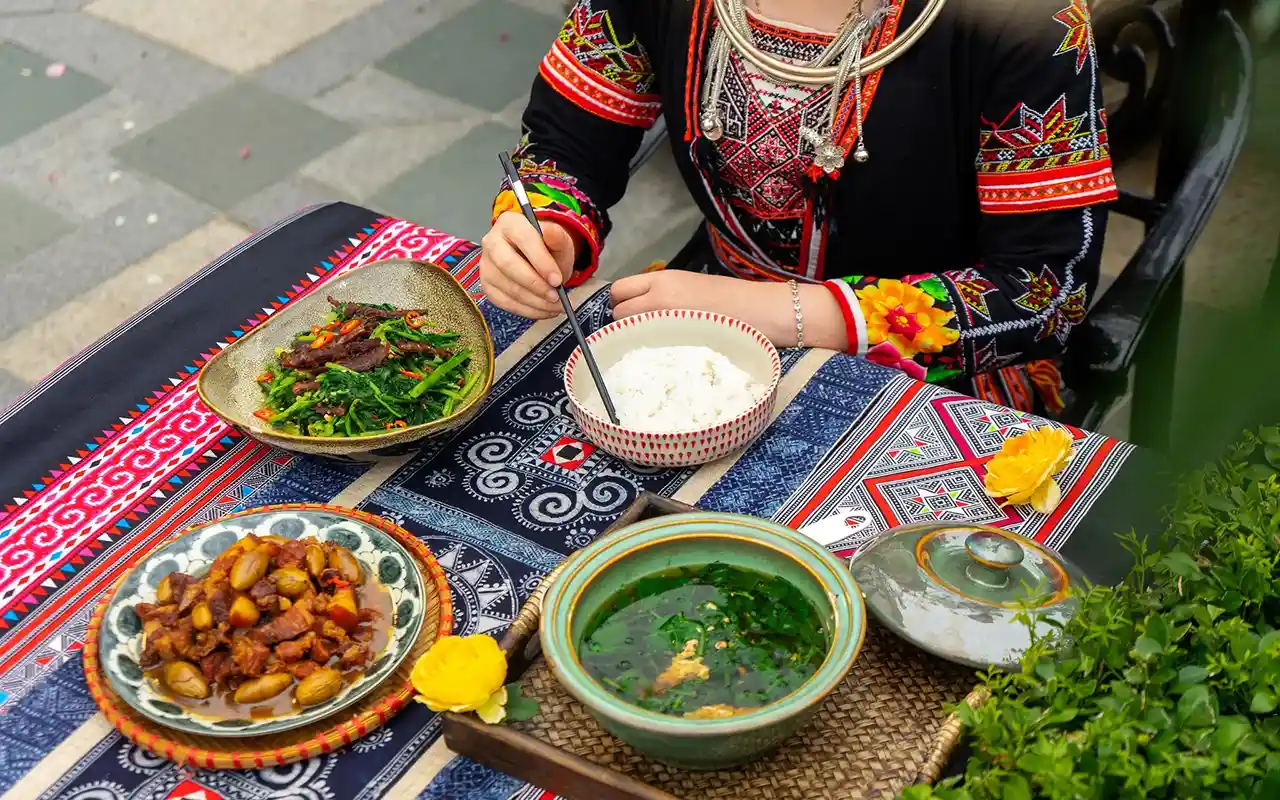

Sapa’s Food Culture
At 1,500m in the mountains of northwest Vietnam, Sapa’s food has evolved in complete isolation from the lowland cooking of Hanoi and Saigon. The ingredients are shaped by what grows at altitude in cold, moist conditions: free-range mountain pork, freshwater fish from cold streams, wild herbs gathered from the forest, black cardamom, and an extraordinary variety of vegetables that simply don’t exist at lower elevations.

The culinary traditions of the H’mong, Red Dao, Tay, and Giay minorities coexist in Sapa’s market and dining culture, with Vietnamese and increasingly international influences layered on top in the town centre. The result is a food scene that’s more interesting than most visitors expect — but one that requires knowing what to order. Many tourist-facing restaurants in Sapa serve generic Vietnamese dishes that have little to do with actual mountain cuisine. This guide tells you what to look for instead.
Planning your full trip? The complete Sapa travel guide covers everything you need before arrival. For day-by-day meal timing — including when to hit the morning market for phở — see the 3-day Sapa itinerary.
10 Must-Try Local Dishes
The most distinctive dish in Sapa — a rich, intensely flavoured stew of horse meat, organs, lemongrass, black cardamom, and Sapa’s signature dried spices. Cooked in a large communal pot over an open fire and served with fresh herbs and sticky rice. Deeply polarising: some travellers love it immediately, others find the offal content challenging. Try it at least once — it’s genuinely unlike anything else in Vietnam.
Free-range mountain pigs raised on maize and foraged food give the pork a depth of flavour that lowland pork simply can’t match. The traditional H’mong preparation involves salt-curing and air-drying in the mountain air for weeks, then grilling over a wood fire. The result is intensely savoury, slightly smoky, with a texture somewhere between cured bacon and brisket. Easily the best pork dish in Vietnam, in my opinion.
The cold, clear mountain streams around Sapa support exceptional trout and salmon farming. The fish are typically grilled over charcoal or wood with lemongrass, ginger, and dill — a northern Vietnamese herb combination distinctly different from central or southern cooking. The flesh is firm, clean, and sweet. Order it whole and grilled rather than in a sauce to appreciate the quality of the fish itself.
Glutinous rice packed inside a fresh bamboo tube and roasted over an open fire. The bamboo imparts a subtle, sweet, slightly smoky flavour to the rice that’s completely unique. Sold widely at market stalls, roadside stops, and in homestay meals. An iconic Vietnamese mountain food, and one of the most immediately appealing dishes for first-time visitors. Kids love it. Adults love it. Essentially impossible to dislike.
Sapa’s version of Vietnam’s national dish tastes genuinely different from Hanoi phở. The broth is richer and darker, slow-cooked with mountain-specific spices including black cardamom that grows abundantly in this region. The beef is locally sourced from mountain cattle that are significantly more flavourful than lowland animals. A bowl of Sapa phở on a cold, foggy morning is one of the great simple pleasures of travelling in northern Vietnam.
Sapa’s market overflows with wild vegetables and herbs that don’t exist anywhere else in Vietnam: bitter fern tips, wild amaranth, mountain mustard greens, dozens of varieties of wild mushroom. Stir-fried simply with garlic and a touch of chilli, these vegetables are some of the most intensely flavoured greens I’ve eaten anywhere in Asia. Ask for the seasonal wild vegetables — good local restaurants will know exactly what’s available.
A visually extraordinary dish — glutinous rice dyed five different colours using natural plant extracts: black (gac fruit), red (red leaf), yellow (turmeric), green (pandan), and purple (butterfly pea flower). Served at festivals and special occasions, it’s also available at Sapa market stalls. The flavour is subtly sweet and nutty; the presentation is genuinely beautiful and makes for one of the best food photographs of the trip.
The corn grown at altitude in Sapa’s valleys is a different variety from lowland corn — smaller, harder, and intensely sweet with an almost nutty flavour. Grilled over charcoal and rubbed with butter or salt, it’s one of the best street snacks in Vietnam. Sold by elderly H’mong women at small roadside fires throughout the town — especially in the evenings when the mountain air drops below 15°C and everyone wants something warm.
The forests around Sapa produce a remarkable variety of wild mushrooms: king oyster, wood ear, shiitake, and numerous local varieties with no English names. A mushroom hot pot with mountain vegetable accompaniments is one of the best communal eating experiences in Sapa — warm, deeply flavoured, and perfect for the cold mountain evenings. Many mid-range restaurants offer this as a set meal for 2–4 people.
Minced buffalo meat mixed with spices, stuffed into casings, and smoked over a slow wood fire for days. The result is intensely flavoured, slightly chewy, and deeply savoury — a sausage style unique to the northwestern highlands. Sold at Sapa market and specialist stalls, it’s excellent eaten as a snack with rice wine or as a starter in a full mountain meal.
Best Restaurants in Sapa by Budget

The best-value food in Sapa, period. The ground floor market has a wet section with fresh produce and a cooked-food section with local women serving morning phở, sticky rice, cơm lam, and grilled corn from 6am. This is where the local H’mong community eats breakfast. Sit down at a shared table, point at what others are eating, and you’ll spend 40,000 VND on one of the best breakfasts of your trip.

One of the most consistently recommended budget spots among travellers who wander off the main drag. The menu covers Vietnamese staples — grilled pork skewers, spring rolls, phở, tofu curry — cooked using traditional methods with noticeably fresh ingredients. Portions are generous. The atmosphere is casual and staff are helpful with ordering. Fills up quickly at dinner; arrive before 6:30 pm or expect a short wait.

The most reliably good all-day dining option in Sapa. The menu covers local mountain dishes alongside well-executed Vietnamese standards — the mountain pork, grilled trout, and mushroom hot pot are all excellent. Views across the valley from the upper-floor terrace are superb. Popular with trekking guides and long-term visitors, which is usually a reliable endorsement.

One of the longest-established restaurants in Sapa with a consistently strong reputation among both travellers and locals. The H’mong-style set meals — multiple small plates of mountain dishes served together — are the best way to experience the breadth of local cuisine in a single sitting. The salt-fermented pork and wild vegetable dishes are outstanding.

Sapa’s best dining experience, set inside a beautifully restored colonial-era building. The menu treats H’mong and minority cuisine with genuine respect and creativity — refined presentations of thằng cố, house-cured mountain ham, and extraordinary local ingredient-driven tasting plates. The wine list is ambitious for this region. Book in advance for October and Vietnamese holiday periods.

The restaurant at Topas Ecolodge — one of Sapa’s most acclaimed boutique properties — serves a nightly set menu focused on locally sourced ingredients from surrounding villages. The location, set among terraced hillsides with panoramic valley views, makes this an exceptional dining experience. Reservation essential; primarily for lodge guests but open to outside bookings when capacity allows.
Street Food & Markets
Some of the best food in Sapa isn’t in restaurants at all — it’s at the morning market and the small street stalls that cluster on the main streets after 5pm when temperatures drop.

Sapa Morning Market
Open daily from 5:30am, the indoor market’s food section offers the most authentic and affordable eating in Sapa. Go before 9am for the full experience — fresh-grilled corn, steaming phở, cơm lam, and five-colour sticky rice.
Evening Street Stalls
From 5pm, small stalls appear along Cau May and Xuan Vien streets selling grilled corn, skewered meats, and hot tofu soup (đậu phụ nóng). Perfect cold-weather evening snacks for under 30,000 VND each.
Bac Ha Sunday Market
90 minutes from Sapa — a traditional hill-tribe market with outstanding food stalls. The thắng cố here is widely considered more authentic than in Sapa town. Worth a full day trip for the food alone.
Can Cau Saturday Market
Even more remote than Bac Ha, this Saturday market near the Chinese border serves extraordinary local minority food with almost no tourist presence. An adventure for genuine food explorers.
Eating at a Homestay
Homestay meals are, for many travellers, the culinary highlight of their entire Sapa trip. A traditional H’mong or Dao family meal served on a low table around a central fire typically includes 8–12 small dishes: the house-cured pork, wild vegetables, mountain herb omelette, sticky rice in multiple preparations, fresh herbs, and often a small jug of homemade rice wine.

The experience is communal and generous. Hosts typically cook more food than you could possibly eat — refusing politely is fine and expected. The cost is usually included in the homestay price or charged at a flat rate of around 100,000–150,000 VND per person — extraordinary value for the quality and cultural richness of the meal.
Homestay meals are included in most guided overnight treks. The trekking tours guide reviews which operators include the best village lunch stops on their day routes — a good guide will specifically choose homestay families known for exceptional cooking.
Always confirm meals are included or at what cost when booking. Some higher-end homestays offer Western breakfast options — politely decline these and ask for the local breakfast instead. The difference between a homestay meal and what tourist restaurants serve with the same ingredients is dramatic — the home kitchen version is almost always better.
Drinks: Local Spirits & Teas

-
🌽Rượu ngô (Corn wine) The H’mong’s traditional distilled spirit, made from black maize. Clear, strong (around 40–45%), served at room temperature in small ceramic cups. Expect to be offered this at any homestay meal. Sip slowly — it’s smooth but very effective.
-
🍎Rượu táo mèo (Crab apple wine) A lighter, slightly sweet rice wine infused with local crab apples and mountain herbs. More approachable than corn wine and genuinely delicious. Buy a bottle at the market to take home — it travels well.
-
🍺Snowcap Sapa beer A local craft beer brewed in Sapa using mountain spring water. Light, clean, and reasonably priced. Available at most mid-range restaurants. A good option if you want something cold and local.
-
🍵Mountain herb tea Dried wild herbs blended into aromatic hot teas, sold by market vendors and served at most homestays. Flavours vary by season and elevation. Some are genuinely medicinal in local tradition.
-
🥤Fresh sugarcane juice Pressed to order at market stalls. Cold and intensely sweet — excellent energy recovery after a long trek.
Homemade rice and corn wines at very cheap prices in informal settings carry a small but real risk of methanol contamination. Stick to commercially sold versions from reputable market stalls or the rice wine served at established homestays, which have been sold safely for years. If it smells like paint thinner, it is paint thinner.
What’s available to eat and drink in Sapa also changes dramatically by season — the wild mushroom hotpot peaks in autumn, mirror-terrace visits pair with spring markets, and winter brings festive Tết foods. See the month-by-month Sapa weather guide to understand what’s in season for your visit.
Food Budget Guide
| Budget Level | Daily Food Cost | What You Get |
|---|---|---|
| Shoestring | 150,000–250,000 VND (~$6–10) | Market breakfasts, street stalls, local eateries. All excellent quality. |
| Comfortable | 300,000–500,000 VND (~$12–20) | Mix of local restaurants and mid-range dining. Includes grilled trout and mushroom hotpot. |
| Splurge | 600,000–1,200,000 VND (~$25–50) | Hill Station or Topas Ecolodge dinners, craft cocktails, the full experience. |
The excellent news for food in Sapa: budget options are genuinely some of the best. The market stall phở at 40,000 VND is not a compromise — it’s frequently better than the 200,000 VND restaurant version three streets away.
What to Avoid
If you’re worried about stomach sensitivities on the trail, the Sapa packing list has a dedicated health section covering rehydration salts, probiotics, and what to carry on multi-day treks where you’re eating entirely from village kitchens.
Frequently Asked Questions
Is the food in Sapa suitable for vegetarians?
Partially. The wild vegetable dishes, bamboo sticky rice, five-colour rice, mushroom hotpot, and most market snacks are naturally vegetarian. However, the most distinctive local dishes — thắng cố, mountain pork, grilled buffalo sausage — are meat-based. Mid-range restaurants will usually accommodate vegetarian requests with advance notice. Tell your homestay host at booking stage and they’ll prepare an excellent vegetarian version of the communal meal.
What is “thắng cố” and should I try it?
Thắng cố is the H’mong’s traditional horse meat and offal stew, considered the signature dish of northwest Vietnam’s minority cuisine. It’s rich, heavily spiced, and deeply unfamiliar to most Western palates — particularly the offal content. I’d recommend trying at least a small bowl: it’s a genuine culinary window into H’mong culture that you simply can’t experience anywhere else. Approach it as an adventure rather than expecting something universally appealing.
Where is the best place to eat phở in Sapa?
The indoor market’s food section, starting from 6am. Look for stalls with a large simmering pot and local H’mong women serving. The broth is made with mountain beef bones, black cardamom, and local spices that give Sapa phở its distinct character. For a sit-down restaurant option, Mountain Bar and Pub does a reliable version with good views.
Is the food at homestays safe to eat?
Generally yes. Established homestays — particularly those with Booking.com listings and consistent guest reviews — have been feeding travellers safely for years. Stick to freshly cooked dishes, avoid raw salads if your stomach is sensitive to new environments, and be cautious with the homemade rice wine. The cooking over open fire means most proteins are thoroughly cooked.
Not sure which hotels or homestays offer the best kitchen access? The complete Sapa hotels guide flags which properties include exceptional communal meals as part of the experience — a great shortcut for food-focused travellers.


The market breakfast recommendation was a game-changer. Went at 6:30am on day one and had the best bowl of phở I’ve ever eaten in my life for about $1.60. The H’mong woman serving it just handed me a bowl, pointed at the herbs and chilli paste on the table, and walked away. Perfect interaction. The five-colour sticky rice next door was also insanely good.
Is the corn wine at homestays actually safe to drink? I’ve heard mixed things about homemade spirits in Vietnam.
Good question, Marco — and valid concern. Established homestays that have been taking travellers for years are generally fine. The risk is with very cheap, informal spirits in random settings that have no provenance. At a proper H’mong homestay where they’ve been distilling the same corn wine for generations and serving it to guests consistently, you’re drinking what their own family drinks. That’s a reliable signal. The warning in the guide is more about $1 mystery bottles from unmarked stalls with no context. When in doubt: if it’s being drunk at the table by the hosts, it’s safe. If it’s being poured from a plastic bag by someone you’ve never seen before, pass.