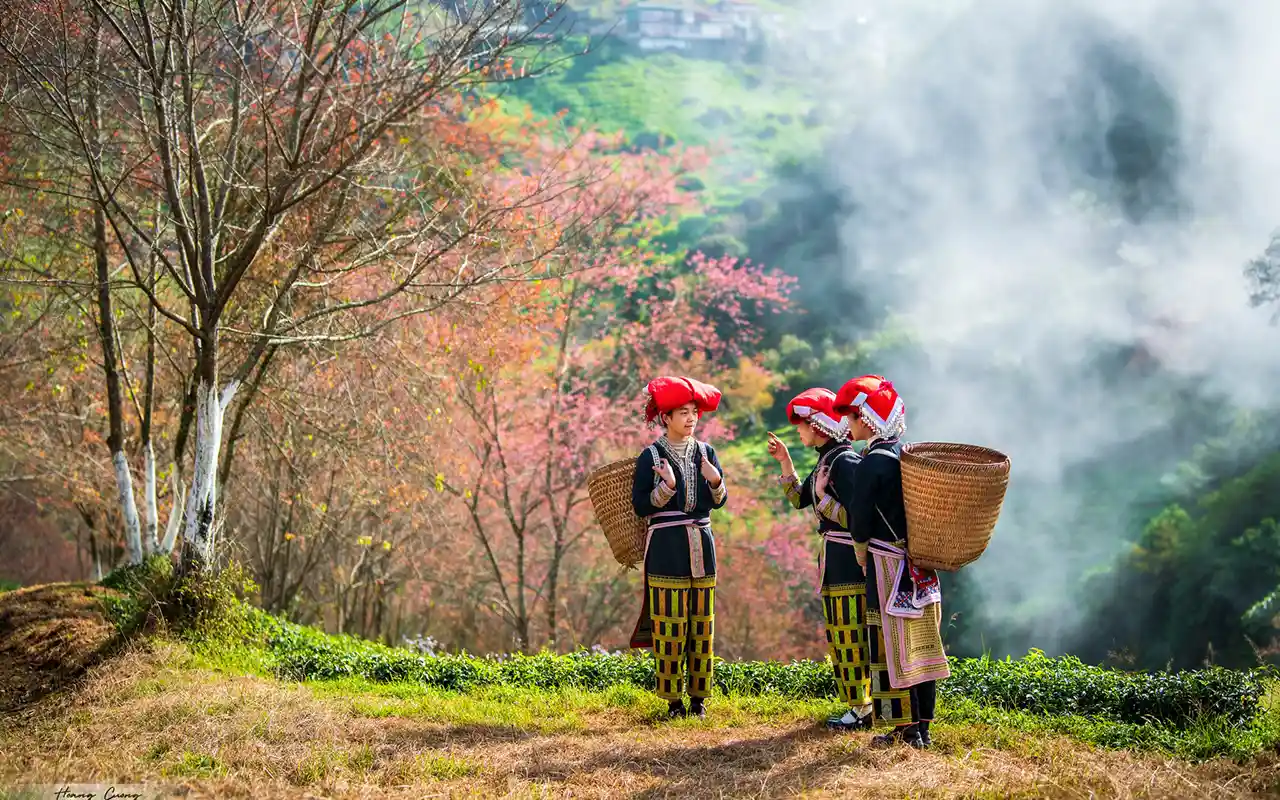

Why Sapa Is a Photographer’s Dream
In eight years of travel photography across Asia, I’ve shot in rice terraces from Bali to Yunnan. None of them compare to Muong Hoa Valley in October. The scale is extraordinary — thousands of stepped terraces cascading down multiple mountain faces simultaneously, all within a single viewpoint. Add the morning mist that routinely rolls in from the valley floor, the colourful traditional dress of H’mong and Red Dao women, and light that changes every fifteen minutes at altitude, and you have conditions that make it genuinely difficult to take a bad photograph.

But “easy to photograph” and “easy to photograph well” are very different things. The biggest mistake most first-time Sapa photographers make is arriving without a plan for light, location, and timing. This guide gives you that plan.
New to Sapa entirely? Start with the complete Sapa travel guide for the full planning picture, then come back here to map the photography opportunities onto your schedule. The 3-day Sapa itinerary is also worth reading alongside this guide — it’s structured to put you at the key viewpoints at exactly the right times of day.
Understanding Sapa Light
Sapa sits at 1,500m in a mountain valley that channels weather in unpredictable but patterned ways. The mist that floods the valley most mornings is your greatest creative ally — it transforms ordinary landscapes into something otherworldly. The key is working with Sapa’s light rather than waiting for “perfect” skies that may never arrive.

Pre-dawn: absolute stillness, deep mist in the valley. If clear, the sky turns extraordinary pink and orange over the peaks. The single best window of the day for landscape work.
Morning mist begins rising from the terraces. Side-lighting from the east creates texture and depth on every stepped surface. Village activity begins — farmers heading to fields, smoke from cooking fires.
Direct overhead light flattens the landscape and bleaches terrace colours. Acceptable for people and village documentation; avoid wide landscape shots. Use this time for trekking between locations.
Afternoon sun drops below the opposite ridge, creating long directional shadows that sculpt the terraces beautifully. Cloud formations often build dramatically. Excellent for wide-angle landscape work.
The best golden hour of the day. In October the rice turns a deep amber under this warm light. Incredible colour contrast. Aim to be at your primary location 30 minutes before sunset.
The valley fills with a cool blue-grey tone. Village lights appear in the distance. Excellent for long-exposure work if you have a tripod and the mist cooperates.
Sapa mist is unpredictable but follows broad seasonal patterns. October morning mist typically burns off by 8–9am, leaving clear skies. Winter mist (December–February) can last all day — frustrating for terrace photography but extraordinary for moody atmospheric shots. Never write off a misty morning as “bad weather.” Shoot it.
7 Best Photography Locations in Sapa

The definitive Sapa photography location — a sweeping elevated viewpoint overlooking the full width of Muong Hoa Valley. The cascade of terraces stretches for several kilometres in either direction. This is the shot everyone comes to Sapa for, and it genuinely lives up to the reputation when the light and conditions align.
Arrive at least 30 minutes before sunrise. Bring warm layers — pre-dawn temperatures at the viewpoint are significantly colder than in town even in October. A wide-angle lens (16–24mm) is ideal for capturing the full scale. In late September and October, every terrace turns gold simultaneously, creating a depth of colour that is almost impossible to believe in person. The viewpoint is most easily reached on a guided trek — see the trekking tours guide for operators who route through the best photography positions.
The closest village to Sapa town and the easiest to photograph on a tight schedule. The terraces immediately below the village are exceptionally photogenic, and the H’mong women in traditional indigo clothing working the fields provide incredible foreground subjects for landscape compositions. The suspension bridge over the rushing stream is a classic frame.
Come early — the village gets crowded with day-trippers by 9am. Pre-8am gives you genuine quiet and the best morning light on the terraces below the village. The walk down from Sapa town takes about 20–30 minutes along a well-signed path.
Further from town and significantly less visited than Cat Cat, Ta Van sits deep in Muong Hoa Valley among a patchwork of small H’mong and Giay minority villages. The terraces here are more intimate in scale, and the lack of tourist infrastructure means the scenes you encounter — daily farm work, children playing, elders weaving — are genuinely unstaged. Outstanding for documentary-style and people photography.
The cloud-garden mountain rising directly above Sapa town. The summit path takes about 45 minutes from the entrance and provides an extraordinary bird’s-eye view of the town, the church, and the full sweep of the valley beyond. On clear mornings the sea of clouds below is a genuinely surreal sight. One of the best spots in Sapa for sunrise photography without requiring a taxi or early drive.
Sapa’s daily market is a riot of colour — H’mong women in layered indigo and silver, Red Dao women in bright embroidered headscarves, Tay women in blue jackets. The produce section is visually extraordinary too. For even more dramatic market photography, the Bac Ha Sunday Market (90 minutes from Sapa) is one of the most colourful hill-tribe markets in all of Vietnam and far less visited by international tourists.
A 200m waterfall that crashes dramatically down a forested cliff. At full monsoon flow (June–August) it’s genuinely thunderous. Even in dry season the volume is impressive. For photography, a tripod and ND filter for long-exposure silky water effect works beautifully here. Arrive early to avoid coach tour groups who appear from around 9am. Overcast light is actually preferable to harsh direct sun for waterfall photography.
At 3,143m, Vietnam’s highest peak provides photography opportunities that exist nowhere else in the country. When cloud cover is below the summit — most common in October and early November — you shoot from above a white sea of cloud with surrounding peaks breaking through. The scale is staggering. Take the cable car for the best light, arriving at the summit before 9am if possible. Snow on the summit in January and February creates extraordinary conditions for those willing to endure the cold.
What to Photograph in Sapa

Rice Terraces
The defining image of Sapa. Golden in October, mirrored in April, lush green in July. Shoot in raking side light for maximum texture. Include a human figure for scale.
Hill-Tribe Portraits
H’mong women in indigo, Red Dao in embroidered scarves. Always ask permission first — see the ethics section. Natural window light in doorways is extraordinary.
Morning Mist
The mist rolling through mountain valleys is Sapa’s most atmospheric subject. A long telephoto (200–400mm) compresses the misty layers beautifully.
Village Life
Daily farm work, children playing, elders weaving. Spend time in one village rather than rushing between several for the most authentic and intimate results.
Market Colour
Vibrant textiles, fresh produce, traditional crafts. Overcast light is ideal — it saturates colour without harsh shadows. Shoot at market opening time for the best activity.
Trail Details
Bamboo bridges, stone steps worn smooth by centuries, water buffalo crossing streams. Wide-angle perspective creates compelling environmental portrait shots on any trek.
Camera Settings by Scenario

Rice Terraces at Sunrise
- ModeAperture Priority or Manual
- ISO100–400
- Aperturef/8–f/11 (max depth)
- White BalDaylight / Cloudy (warmer)
- TripodEssential at pre-dawn
Valley Mist & Atmosphere
- ModeAperture Priority
- ISO400–1600
- Aperturef/4–f/5.6
- Exposure+0.3 to +0.7 EV (mist is bright)
- FocusManual on distant subject
Village People & Faces
- ModeAperture Priority
- ISO200–800
- Aperturef/2–f/2.8 (background blur)
- Shutter1/250s minimum
- FocusEye AF (single point)
Silver Falls Long Exposure
- ModeManual
- ISO100 (base)
- Aperturef/11–f/16
- Shutter1/4s–2s (with ND filter)
- TripodMandatory
| Scenario | Focal Length | ISO Range | Key Tip |
|---|---|---|---|
| Terrace landscape | 16–24mm | 100–400 | Tripod essential pre-dawn; shoot in RAW |
| Village portraits | 50–85mm | 200–800 | Use natural doorway light; always ask first |
| Mist layers | 70–200mm | 400–1600 | Telephoto compresses misty layers dramatically |
| Market colour | 35–50mm | 200–800 | Overcast light saturates without harsh shadow |
| Silver Falls | 16–35mm | 100 base | 6–10 stop ND filter for silky 1–2s exposure |
Best Season for Photography
Every season offers compelling photography opportunities — but the subjects and style change dramatically. Here’s the honest breakdown for photographers specifically:

-
October (peak): Golden rice terraces, perfect light, crisp air. The classic postcard shots. Most competitive for position at viewpoints — arrive early and accept you’ll share the space with other photographers.
-
April–May: Flooded terraces create mirror reflections of the sky — arguably more dramatic and creative than autumn gold. Far fewer photographers competing for space. This is the hidden gem window.
-
September: Early harvest gold, clear post-monsoon air, still slightly fewer crowds than October. Excellent value window for photographers who plan ahead.
-
January–February: Fog, mist, and occasional snow create moody, atmospheric landscape work impossible to replicate in other seasons. Challenging but uniquely rewarding.
-
June–August: Intense emerald green landscapes and dramatic waterfall flow. Expect challenging shooting conditions from rain and humidity. Waterfalls at maximum flow.
For the full seasonal breakdown including temperatures, crowd levels, and trekking conditions alongside the photography opportunities, see the month-by-month Sapa weather guide.
Ethical Photography in Villages
This section is not optional reading. Sapa’s hill-tribe communities have been photographed by millions of tourists, and the relationship between visitor cameras and local people is complicated. Approaching it thoughtfully produces better photographs and a better experience for everyone involved.

Before photographing any person in a Sapa village — adult or child — make eye contact, smile, and gesture at your camera with a questioning expression. A nod or smile is consent. A shake of the head or turned back means no. Respect it absolutely, without argument or persistence.
Some practical guidelines that consistently produce better experiences and better photographs:
- Hire a local guide. A guide from the community you’re visiting transforms the dynamic. They make introductions, explain context, and create genuine trust. The resulting portraits are incomparably more natural and intimate than anything achieved by a solo tourist pointing a long lens from a distance.
- Spend time before you shoot. Sit, accept tea if offered, watch daily activity. People become comfortable and stop performing for the camera within 20–30 minutes. This patience produces the best photographs.
- Show people the image on your screen. A near-universal positive response, especially with children. It creates connection and often leads to genuine laughter and more natural shots.
- Don’t photograph children’s faces for commercial use without explicit adult consent. For personal travel photography, the same courteous ask-first rule applies.
- Consider paying portrait subjects. If someone sits for extended portrait sessions, a small payment (20,000–50,000 VND) is fair and appreciated, but always offered discreetly and only after, not as a transactional upfront arrangement.
The “posed” shots of H’mong women in traditional clothing that fill Instagram are often staged for tips. There’s nothing wrong with this arrangement — it’s a legitimate income source — but if your goal is authentic documentation rather than stylised portraiture, focus on genuine village activity rather than the photo-spot areas near the main roads.
Gear Recommendations
You don’t need expensive gear to take exceptional photographs in Sapa — the landscape does most of the work. But certain items make a genuine difference.

- A weatherproof camera body (or a rain sleeve for a non-sealed body). Mist, rain, and damp mountain air are constant factors. A wet camera is an expensive problem.
- Wide-angle zoom (16–35mm equivalent) for terrace landscapes and village environments. The single most important lens for this destination.
- Mid-range zoom (24–70mm) for most situations — the single most versatile choice if bringing only one lens.
- Portrait prime (85mm or 50mm) for village people and market scenes. The background separation at f/2 against a terrace backdrop is extraordinary.
- Telephoto (70–200mm) for compressing misty valley layers and shooting candid village scenes from a respectful distance.
- ND filter (6–10 stop) for Silver Falls and any long-exposure water work.
- Polarising filter — dramatically cuts haze and boosts terrace colour saturation, especially around midday.
- Lightweight tripod for sunrise/sunset landscapes and long exposures. Carbon fibre if weight matters.
- Power bank (20,000mAh+) — cold temperatures drain camera batteries faster than usual, and homestays may not have charging points.
For the full camera and tech packing checklist — including weatherproofing, dry bags, and what to leave behind — see the complete Sapa packing list. The best photography happens at dawn and dusk, which means staying as close to the viewpoints as possible — the Sapa hotels guide covers which properties sit nearest Muong Hoa Valley for effortless golden hour access.
Frequently Asked Questions
What is the single best location for rice terrace photography in Sapa?
The elevated viewpoints overlooking Muong Hoa Valley, particularly the section between Cat Cat and Ta Van villages. In October, the combination of scale, golden colour, and available morning mist makes this the definitive Sapa photography location. Arrive before sunrise for the best conditions.
Can I get great photos with a smartphone?
Yes, with caveats. Modern flagship smartphones perform well in golden hour light and are more than adequate for most Sapa travel photography. They struggle in pre-dawn low light and can’t replicate the background separation of a fast prime lens for village portraits. But the subject matter here is so strong that even basic equipment produces compelling results.
Is a drone worth bringing to Sapa?
The aerial perspective over Muong Hoa Valley is extraordinary. However, drone regulations in Vietnam require registration and flight permits, which can be complex for tourists. Flying near the Chinese border area involves additional restrictions. Check current regulations before travelling — enforcement is inconsistent but penalties for violations can be significant.
How do I photograph people without being intrusive?
The complete answer is in the ethics section above — but the short version: slow down, hire a local guide, make genuine human connection before raising your camera, and always ask. Photographers who spend 3 hours in one village go home with far better portraits than those who rush through 5 villages in a day.
What time should I wake up for sunrise photography?
For the Muong Hoa Valley viewpoint, aim to arrive 30 minutes before official sunrise — which means leaving your accommodation by 4:30–5:00am. For Ham Rong Mountain in Sapa town, the walk takes about 45 minutes, so a 4:00am start gives you a comfortable buffer. Pre-dawn temperatures at the viewpoints are significantly colder than town, so dress accordingly.


The light timeline is genuinely the most useful thing I’ve seen in a Sapa guide. I planned my entire 3 days around it — trekked midday, positioned at the viewpoint by 4pm both days. The afternoon light was exactly as described. Came home with the best photos I’ve ever taken. The ethics section also made a real difference; I hired a local guide and the village access was incomparable.
Going in January — is it worth it for photography or will the mist just be a constant grey wall?
January is genuinely worth it, Tom — just for different work. The persistent mist creates extraordinary atmospheric layering that you cannot replicate in any other season. Long telephoto shots of village silhouettes emerging through white mist are some of the most powerful Sapa images I’ve made, and I made them in February. You’ll need to adjust your expectations from “golden terrace postcard” to “moody mountain documentary” — but that’s a creative opportunity, not a consolation prize. Bring an ND filter and learn to love the grey.